Home Blog Page 3

“Russian Glide Bombs Devastate Dobropillia, Ukrainians Struggle to Survive”

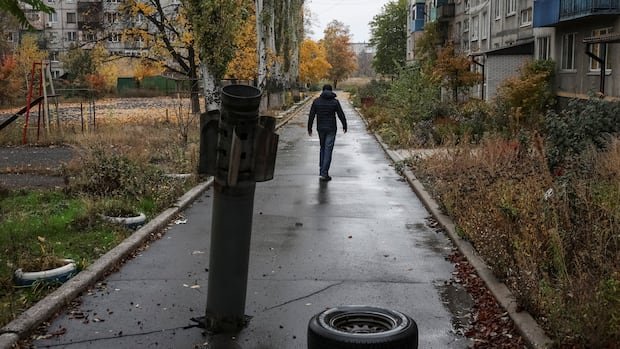
Plumes of smoke are emerging from multiple locations, with buildings in ruins and apartment blocks marked by significant damage from Russian glide bombs in Dobropillia, a town near the front line in Ukraine’s Donbas region. The few remaining residents are navigating the search for basic necessities amid constant surveillance by drones controlling the battlefield.

Viktoriya Sergeeva, who manages one of the town’s last supermarkets, relocated from Pokrovsk following the tragic loss of her parents in a recent bombing. Refugees like Sergeeva have contributed to the town’s population, which has plummeted to under 1,500 residents from 28,000 before the Russian invasion.

Russian soldiers are now present in the town, moving discreetly through Ukrainian lines, reshaping the battlefield into a complex and unrecognizable environment compared to the conventional war of previous years.

Dobropillia, along with Pokrovsk and Myrnohrad, represents a critical front in the conflict, with Russia aiming to seize control while Ukrainian forces are strategically deployed in the area. Amid the evolving dynamics, infantry units face challenges from the intensified use of drones for reconnaissance and attacks.

The shift in Russian tactics from armored assaults to infantry operations supported by drones has forced Ukrainian units to adapt, operating in smaller groups and relying on innovative strategies to counter the drone threat. The use of drones has altered the nature of combat, requiring soldiers to trek long distances on foot and receive supplies via drone deliveries.

Despite the technological advancements in drone warfare, the human toll remains significant, with Ukrainian forces enduring substantial losses in the ongoing conflict. Commanders like Vova and his unit confront the emotional burden of sending soldiers into battle, knowing the high risks involved.

As the war continues, the devastation in Ukrainian-held territories escalates, with a steady exodus of civilians and the looming threat of further incursions by Russian forces. The situation in Dobropillia remains precarious, with the town on the brink of becoming a new front line as tensions persist and local residents brace for the uncertain future.


“Rise of ‘Job Hugging’ Among Canadians Explained”

LISTEN | Why the Increase in Canadians Staying in Unhappy Jobs:

You’ve been at your new job for a few months now, and it’s not what you expected. Despite being unhappy, the fear of the uncertain economic conditions makes you reluctant to leave.

This scenario is not uncommon in Canada, as reflected in the country’s job data and the experiences of those who joined the workforce post-pandemic, leading to the emergence of a trend known as “job hugging.” This term describes the situation where individuals cling to their current jobs even if they are dissatisfied.

A woman in her 30s working in public relations shared her experience with the Cost of Living during a recent interview about her job that commenced in late 2025. She expressed feelings of unfulfillment, lack of purpose, and a sense of stagnation in terms of career growth opportunities.

Despite her discontent, she has chosen to stay put. The prevailing narrative of scarce job prospects and the advice to be grateful for having a job constantly discourages her from seeking new opportunities.

Recent data from the Bank of Canada and Statistics Canada shows a significant decline in job switches, with only 0.41% of individuals changing jobs monthly in 2026, down from 0.82% in January 2022.

Economists attribute the rise in job hugging to factors such as economic uncertainty and reduced financial incentives offered by companies to attract new talent. The prevailing sentiment is that individuals are holding onto their current positions amidst the unpredictable economic landscape.

According to Jim Stanford, a labor economist and director of the Centre for Future Work in Vancouver, people are inclined to maintain their existing jobs due to the perceived risks associated with seeking new opportunities in the current economic climate.

Shift in Employment Dynamics

Post-pandemic, there was a significant shift where employees had the upper hand in the job market. Many individuals left their jobs during this period, leading to a shortage of skilled labor.

Employers were offering attractive perks such as meditation rooms, flexible work arrangements,

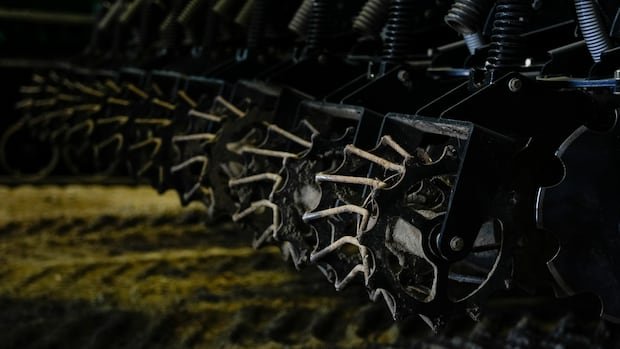
“Study Reveals Urea Fertilizer’s Harm to Canadian Prairies”

A recent study conducted by researchers from Manitoba and Saskatchewan reveals that a commonly used fertilizer is causing significant harm to freshwater bodies in the Canadian Prairies. The fertilizer, urea, is essential for feeding a large portion of the global population, but its impact on aquatic ecosystems has been largely understudied.

The research experiment involved adding urea to farm ponds in Saskatchewan to mimic the effects of agricultural fertilization in the region. The results showed a tenfold increase in microscopic algae growth, leading to oxygen depletion in the ponds. This excess algae growth is detrimental to water quality and can have severe consequences such as fish mortality, toxin exposure, and harmful algae blooms.

The study suggests that nearly half of all Prairie lakes, wetlands, and reservoirs could be degraded due to decades of urea use. The findings indicate that water bodies in agricultural regions in China and the United States are also at risk of similar damage from urea contamination.

While some experts caution against alarmism, emphasizing the need to consider interactions with existing phosphorus levels in the ecosystem, the study underscores the importance of better fertilizer practices and soil management to prevent urea from entering freshwater bodies. It is crucial to develop technologies that keep fertilizers on land and in crops to safeguard water quality and ecosystem health.

The research findings challenge the perception of Canada as a country abundant in freshwater, highlighting the ongoing threats to water resources. As climate change impacts the Prairies, there may be increased variability in water levels, further exacerbating water security issues. Addressing the impact of urea contamination on freshwater bodies is crucial to ensuring the sustainability of water resources for future generations.

“Canadian Cinema Celebrates Life of Actor Graham Greene”

0

As Canadians unite to celebrate Canadian cinema, special events are planned to commemorate the life and impact of Six Nations actor Graham Greene.

Greene, a member of the Oneida tribe from Six Nations of the Grand River in Ontario, passed away at 73 last autumn.

April 15 marks National Canadian Film Day, a CBC co-sponsored nationwide event honoring Canadian cinema with film screenings held in various communities.

As part of the upcoming events, film screenings will pay tribute to Greene’s contributions, including a presentation of his 1991 film Clearcut at The Woodland Cultural Centre in Brantford, Ontario.

The screening is scheduled for 6:00 p.m. on April 15 and will be attended by Greene’s family and Six Nations community members. The event will also feature the screening of the documentary Graham Greene: I’m Just Me by Tara Johns. 

A man with short cropped grey hair and a mustache is shown speaking into a microphone while speaking at an outdoor event.
Graham Greene, a 2021 inductee into Canada’s Walk of Fame, pictured at a Walk of Fame event at Roy Thomson Hall in Toronto on May 26, 2023. (Jeremy Chan/Getty Images)

Screenings of Clearcut and Greene’s acclaimed film Seeds are also planned in Toronto, Ottawa, and Halifax.

Throughout his nearly five-decade career, Greene took on numerous roles in movies and television, earning accolades for his performances.

He was a recipient of the Order of Canada and received an Academy Award nomination for his role in Dances with Wolves. Greene was honored with the Earle Grey lifetime achievement award for television acting (Canadian Screen Award) in 2004 and later received a Governor General’s Performing Arts Award in 2025 for Lifetime Artistic Achievement.

Source

“Militant Attacks in Congo’s Lubero: 89 Civilians Killed”

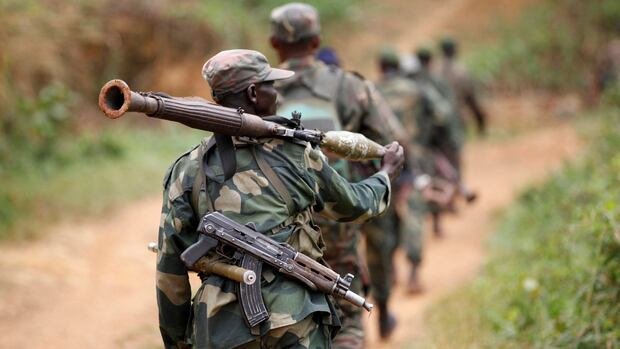
Islamic State-affiliated militants have carried out a series of attacks in the eastern region of the Democratic Republic of Congo’s Lubero territory, resulting in the deaths of 89 civilians, according to the United Nations peacekeeping mission MONUSCO. The Allied Democratic Forces (ADF) militants conducted these attacks in various locations in North Kivu province from November 13 to November 19. Among the victims were 20 women and an unspecified number of children, as reported by MONUSCO.

During one of the assaults, the rebels targeted a health facility run by the Catholic Church in Byambwe, where at least 17 individuals, including pregnant women seeking maternity care, were killed. Additionally, four patient wards were set ablaze by the attackers. The rebels also engaged in other atrocities, such as abductions and the pillaging of medical resources.

MONUSCO has called on Congolese authorities to initiate immediate independent investigations to identify and bring to justice those responsible for these massacres. Local officials had previously informed Reuters of a similar incident where suspected ADF rebels killed 19 civilians in an overnight raid in the village of Mukondo in North Kivu province.

In a separate incident in September, the ADF claimed responsibility for a deadly attack that resulted in the deaths of over 60 civilians at a funeral in eastern Congo. Originating in Uganda, the ADF has been operating in the forests of Congo since the late 1990s and is recognized by the Islamic State as an affiliate.

Efforts to counter the ADF’s activities have been ongoing, with the Congolese army and Ugandan forces conducting operations against the group. However, the ADF’s assaults persist. Meanwhile, parts of North Kivu province are controlled by the Rwanda-backed M23 rebels, who made significant territorial gains this year.

International mediators, including the United States and Qatar, are actively involved in peace negotiations to resolve the conflict in the region. These efforts are seen as crucial for promoting stability and attracting Western investments in the mining sector, according to U.S. officials.

“MLS Commissioner Advocates for Vancouver Whitecaps’ Stadium Change”

0

Major League Soccer’s top official has long been confident in Vancouver’s potential as a leading soccer market. As the Vancouver Whitecaps achieve unprecedented success on the pitch, Commissioner Don Garber is visiting the city to advocate for change. Garber emphasized that his visit aims not only to acknowledge past accomplishments but also to ensure long-term sustainability.

During his visit, Garber will engage with local business leaders and government officials, with a primary focus on discussing the Whitecaps’ stadium agreement. The team currently plays at B.C. Place, a 55,000-seat stadium in downtown Vancouver, managed by PavCo, a provincial entity that leases the venue. In addition to sporting events, the stadium hosts various non-sporting activities, including concerts and trade shows.

Garber expressed concerns about the current stadium arrangement, citing scheduling conflicts and limited revenue from food and beverage sales as key issues. Notably, the Whitecaps had to relinquish home-field advantage for a playoff match due to a prior booking for a motocross event. The club’s lease at B.C. Place is set to expire at the end of December, with ongoing discussions between the Whitecaps and stadium management regarding a potential renewal.

The Whitecaps recently initiated talks with the City of Vancouver regarding the construction of a new soccer-specific stadium at the PNE fairgrounds. Despite ownership changes and stadium challenges, the Whitecaps have maintained their competitiveness both on and off the field. The team’s strong performance in the regular season and playoffs, bolstered by the addition of German soccer star Thomas Müller, has garnered significant fan support and heightened expectations for their upcoming matches.

Garber remains optimistic about finding a resolution regarding the Whitecaps’ stadium situation, emphasizing the importance of aligning on-field success with off-field operations. As the Whitecaps gear up for their playoff run, the potential for a new stadium and ongoing discussions surrounding their current lease underscore the club’s commitment to future growth and success.

[End of rewritten article]

“Legal Battles Delay Opening of Windsor-Detroit Bridge”

The Gordie Howe International Bridge that links Windsor, Ontario, and Detroit has been considered mostly finished since February. However, a significant lawsuit questioning Canada’s decision to construct the bridge may not go to trial until 2027 or 2028, as per a federal briefing note recently acquired.

The briefing note, dated February 17, 2026, and provided to federal Housing and Infrastructure Minister Gregor Robertson by deputy minister Paul Halucha, revealed that construction of the bridge is almost complete. The note mentioned that final activities such as commissioning and testing of essential systems are pending, and the opening is subject to final certifications and readiness from Canadian and U.S. agencies.

The document highlighted U.S. President Donald Trump’s public threat to halt the bridge’s opening, insisting on American involvement despite Canada’s sole financing and construction of the project. Legal disputes with the owners of the Ambassador Bridge have also been ongoing, with the Canadian Transit Company contending that its establishment in 1921 implied protection against competing crossings, a claim that the lawsuit argues was infringed upon by the Gordie Howe International Bridge.

The economic significance of the new bridge is underscored by the expected toll difference, set at $8.75 US per axle compared to $20 US per axle at the Ambassador Bridge. The new crossing, with its modern infrastructure and highway connections, is anticipated to redirect commercial and passenger traffic away from the Ambassador Bridge, offering cost savings and efficiency benefits to trucking associations.

Despite delays and cost overruns, the Windsor-Detroit Bridge Authority remains optimistic about a spring opening for the Gordie Howe International Bridge, emphasizing its vital role as an economic link between the two countries. Infrastructure Canada, overseeing the project, refrained from commenting on the legal challenges but assured that updates on the bridge’s progress would be shared as available information is obtained.

“Chimpanzee ‘Civil War’ Erupts in Uganda”

Scientists have observed a violent clash among a group of almost 200 chimpanzees in Uganda, despite years of peace before the aggression began. Researcher Aaron Sandel witnessed the initial chimp killing, involving a chimp named Erroll, whom he had known since adolescence. Sandel, a primatologist at the University of Texas at Austin, is the lead author of a study recently published in Science, examining this ongoing chimpanzee “civil war.” The Ngogo chimps in Uganda’s Kibale National Park had coexisted peacefully but shifted towards conflict in 2015. The western and central neighborhoods within the group began avoiding each other after a tense encounter, leading to a split that culminated in multiple chimpanzee deaths.

The Ngogo chimps had previously been successful due to their cooperation and territorial defense strategies. However, changes in group dynamics, such as the deaths of key individuals, challenges to dominance, and increased competition for resources, contributed to the escalating aggression. Primatologist Iulia Bădescu highlighted the unusual aspect of this conflict, where chimpanzees with close relationships turned violent towards each other, despite being kin.

The study raises questions about the reasons behind the group split and ensuing violence. Researchers speculate that factors like group size, resource competition, and changes in social dynamics played key roles. The researchers emphasize the importance of understanding interpersonal relationships in mitigating conflicts, drawing parallels between chimpanzee behavior and human conflicts. While the situation among the Ngogo chimps remains uncertain, researchers hope to learn valuable lessons from their behavior to promote peace and reconciliation among humans.

“Dosa Divas” Delivers Heartfelt Family Tale

0

Outerloop, an independent game developer, gained attention a few years ago with their game “Thirsty Suitors,” blending role-playing battles, cooking, and skating in a heartfelt narrative about a young woman reconnecting with her family and dealing with a colorful array of former lovers.

Their latest offering, “Dosa Divas,” stays true to its predecessor while refining the gameplay for a more confident experience. The game revolves around a tale of family reconciliation set in a fantastical world, offering a realistic portrayal despite its whimsical backdrop.

One notable drawback of “Dosa Divas” is that it may leave players craving more content, particularly in terms of rhythm-based battles, cooking mechanics, and further exploration of its endearing characters. It’s akin to the first season of a popular streaming series that could benefit from additional episodes to fully explore its elements.

The storyline of “Dosa Divas” primarily focuses on sisters Samara and Amani, who reunite after a prolonged separation to run a restaurant inherited from their parents. Meanwhile, their younger sister, Lina, has become a prominent figure in the business world, promoting a food substitute while targeting traditional cooking practices.

The game introduces a subplot involving Goddess, a sentient robot-food truck accompanying Samara and Amani on their journey. Other DIVAs, sentient robots allied with the main characters, present challenging boss battles and add a mythical layer to the narrative.

“Dosa Divas” gameplay centers around three main aspects: exploration during the sisters’ journey, turn-based battles against adversaries, and preparing dishes for hungry individuals. The battle mechanics involve timing-based actions reminiscent of classic RPGs, requiring players to execute attacks strategically.

Players gather ingredients from the game world to craft dishes catering to specific tastes, engaging in various mini-games like chopping vegetables or spreading dosa batter. While these cooking segments lack polish compared to the combat system, they contribute to a satisfying loop of progression and character development.

Despite its mechanical simplicity compared to larger RPG titles, “Dosa Divas” offers a poignant exploration of family dynamics and reconciliation. The game’s narrative, though occasionally rushed due to time constraints, presents a candid portrayal of complex relationships and unresolved conflicts.

In conclusion, “Dosa Divas” may have room for improvement in certain gameplay aspects, but its sensitive approach to storytelling sets it apart. Players can access “Dosa Divas” on PCs, PlayStation, Xbox, and Switch consoles for an immersive gaming experience.

“Ukraine at Crossroads: Zelenskyy Considers U.S. Peace Proposal”

Ukraine is approaching a critical juncture in its nearly four-year struggle against Russia’s full-scale invasion, President Volodymyr Zelenskyy informed the Ukrainian people in a national address on Friday. Zelenskyy expressed readiness to engage in productive discussions with Washington regarding a U.S. peace proposal.

The U.S. plan aligns with many of Russian President Vladimir Putin’s longstanding requests, including Ukrainian territorial concessions, while providing limited security assurances to Ukraine. It envisions Ukraine ceding land to Russia, a move Zelenskyy has consistently opposed, reducing the size of its military, and obstructing its desired path to NATO membership.

In a radio interview on Friday, U.S. President Donald Trump indicated his desire for a response from Zelenskyy on his 28-point Ukraine plan by Thursday, with a potential extension to finalize terms. Trump mentioned the possibility of extending deadlines if progress is made but emphasized Thursday as the target date.

While Zelenskyy has shown willingness to negotiate with the U.S. and Russia, he acknowledged that Ukraine may not achieve all its objectives and faces the risk of losing American support if it takes a firm stance. Zelenskyy emphasized the importance of fair treatment while navigating the challenging circumstances.

Efforts by the U.S. were praised by Zelenskyy, who had conversations with leaders of Germany, France, and the United Kingdom. The European leaders affirmed their unwavering support for Ukraine and commended American peace initiatives. They emphasized the importance of safeguarding European and Ukrainian interests for long-term peace, highlighting the critical role of the Ukrainian armed forces in defending the country’s sovereignty effectively.

European countries perceive the conflict between Ukraine and Russia as a potential threat to their own futures and have emphasized the necessity of being included in peace negotiations. EU foreign policy chief Kaja Kallas underscored that any agreement must be in Ukraine’s best interests, emphasizing that Russia has no legitimate claim to concessions from a country it invaded.

The ongoing conflict in Ukraine was underscored by a recent incident where a Russian glide bomb struck a residential area in the city of Zaporizhzhia, resulting in casualties. Meanwhile, a drone attack in Odesa caused injuries, further illustrating the continued violence inflicted by Moscow’s forces on civilian populations in Ukraine.

These developments come at a challenging time for Zelenskyy, who is not only contending with military pressures from Russia but also grappling with a significant domestic corruption scandal. The situation underscores the complexity of the circumstances facing Ukraine and the need for strategic decision-making to navigate the evolving challenges.

[End of the rewritten article]