

After last week’s winter storm, families in Gaza are confronted with a heartbreaking dilemma: remain exposed in tents after floods obliterated their shelters and belongings, leading to the tragic death of a baby from exposure, or seek refuge in buildings damaged by Israeli strikes earlier in the conflict that may collapse unexpectedly.
On Tuesday, a two-storey house in northwest Gaza City became the latest to partially collapse, trapping a family beneath the debris, resulting in the death of one man and serious injuries to a family of five, according to local officials. This incident follows warnings from authorities the previous day about the potential collapse of more weakened structures as strong winds and heavy rain continue to batter Gaza.
Abu Rami Al-Husari, 46, recounted that his brother and nephews were at Hamid Junction in northwest Gaza City when the upper floor of the building they sought shelter in, which had already sustained damage from Israeli bombardment, fell in on them.
“This winter storm impacted everything, causing the home to collapse on them,” Al-Husari told CBC’s Mohamed El Saife on Tuesday.
“There’s nowhere to live … space is non-existent. They had no choice but to stay here.”
-
At least 12 Palestinians dead or missing in Gaza as devastation from floods spreads
-
Baby dies of exposure after winter storm floods Gaza tents, medics say
Recent torrential rains and plummeting temperatures have plunged Gaza deeper into a humanitarian crisis, with families losing their scant belongings and food supplies soaked inside their flooded tents. Additionally, some have died from exposure or due to sudden building collapses.
Humanitarian organizations have been alerting that the volume of aid entering Gaza since the ceasefire agreement between Israel and Hamas on October 10 is far from what was promised.
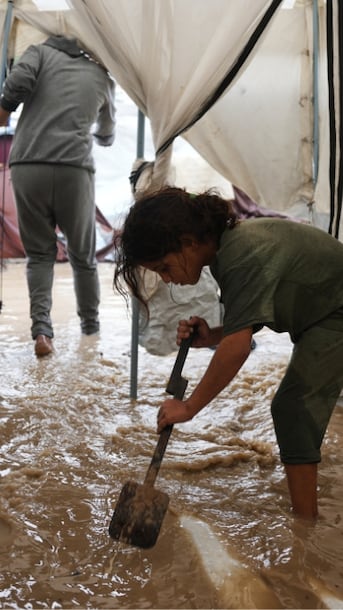
At least 12 people are dead or missing, including a baby girl who died from exposure to the cold, after torrential rain from storm Byron swept across the Gaza Strip this week.
The Gaza government media office reported that at least 11 individuals lost their lives, with one person still unaccounted for, due to the collapse of buildings that were already damaged by the war and affected by the storm and weather conditions.
Additionally, more than a dozen buildings have collapsed, and over 27,000 tents serving as temporary shelter have been either washed away or inundated since the storm struck.
The Palestinian Civil Defence has issued warnings advising people against staying inside damaged structures, as they too are at risk of collapsing. The United Nations and Palestinian authorities indicated that approximately 300,000 new tents are urgently required for around 1.5 million displaced individuals, many of whom have no choice but to seek refuge in partially standing buildings.
Rescue teams operating with limited resources
Muhammad Shraim, the director of the Palestinian Civil Defence in the northern governorate, stated that rescue teams have been able to save family members using “very basic” equipment.
“Numerous buildings damaged by Israeli forces are at risk of collapsing,” Shraim informed CBC.
On Friday, local health authorities reported that 12 individuals died after two buildings collapsed.
Mohammad Nassar went out on Friday to gather essentials. Upon returning to a six-storey building — severely damaged by Israeli airstrikes earlier in the conflict — where his family was taking shelter, he found it had transformed into a scene of devastation, with rescuers struggling to extract bodies from the rubble, including those of his children.
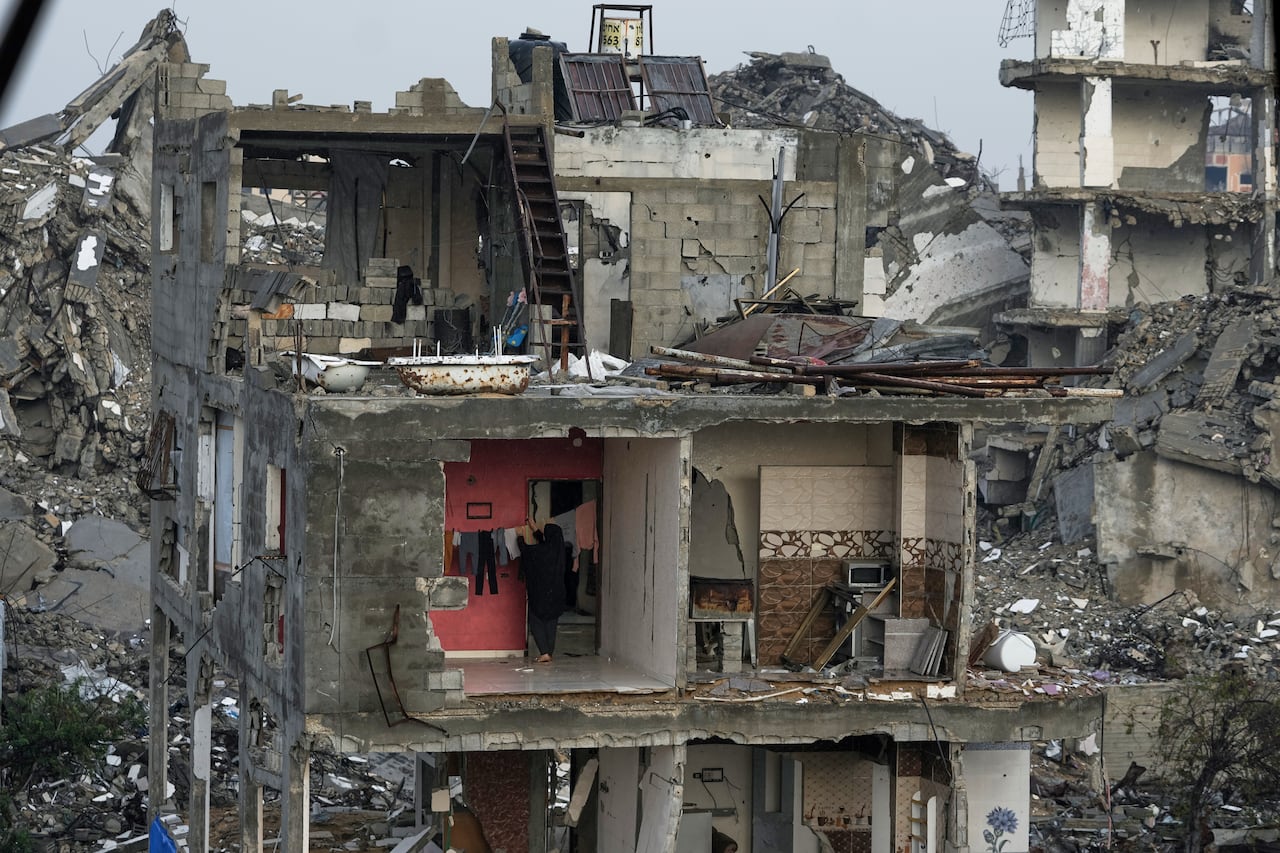
A Palestinian woman hangs laundry inside of partially destroyed apartment building with exposed walls in Gaza City Monday. Recent torrential rains have flooded the war-battered territory, wreaking havoc on Palestinians already living in precarious conditions during the Israel-Hamas ceasefire. (Jehad Alshrafi/The Associated Press)
Tragically, his 15-year-old son and 18-year-old daughter perished in the building’s collapse.
“I saw my son’s hand protruding from beneath the rubble. That was the most heart-wrenching sight for me. My son is trapped under the ground, and we are powerless to rescue him,” Nassar recounted to Reuters.
He mentioned that his family had been struggling to find alternative housing and had previously been displaced by flooding while living in a tent during another spell of severe weather.
-
Their 2 kids waited months for medical evacuation from Gaza. 1 died just days after leaving
-
Gaza aid deliveries falling short of ceasefire terms: AP analysis
Mahmoud Basal, spokesman for Gaza Civil Defence, urged the international community to provide mobile homes and caravans rather than tents for displaced Palestinians.
“If people are not adequately protected today, we will see more victims, including children and entire families trapped under these buildings,” he stated on Monday.
Immediate need for new tents
The head of the UN Palestinian refugee agency emphasized that more aid must be permitted into Gaza without delay to avert further risks to displaced families.
“With the severe rain and cold brought by storm Byron, people in the Gaza Strip are freezing to death,” warned UNRWA commissioner-general Philippe Lazzarini in a post on X on Monday. “The waterlogged ruins where they are taking shelter are collapsing, exposing them to even more cold.”
Lazzarini stated they have supplies that have been awaiting entry into Gaza for months. Most existing shelters are either dilapidated or constructed from flimsy plastic and cloth.
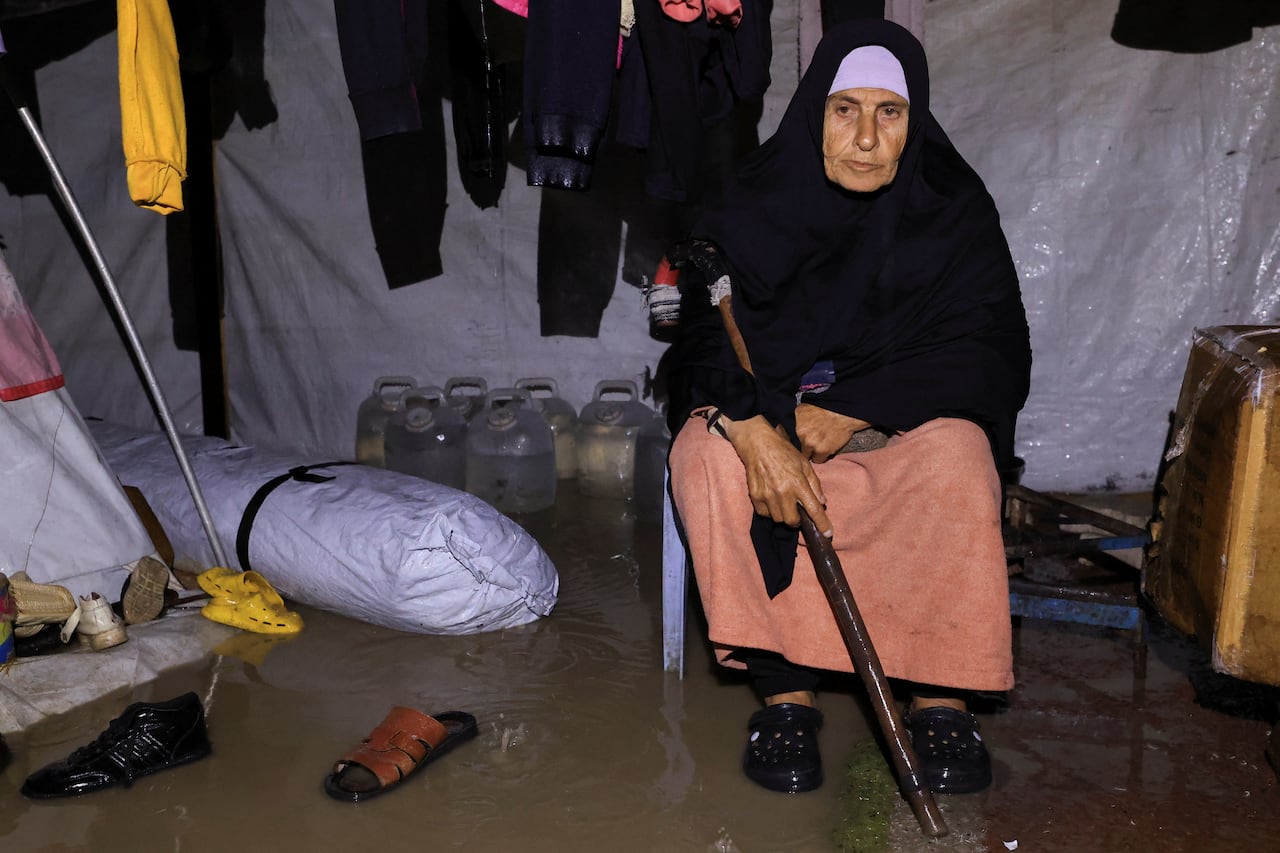
A displaced Palestinian woman shelters in a flooded tent Monday in Gaza City after last week’s storm Byron hit residents across the territory, damaging their tents, belongings and food supplies. (Dawoud Abu Alkas/Reuters)
COGAT, the Israeli military body responsible for humanitarian matters in the Palestinian territories, disputed the UN’s statistics, asserting on Monday that approximately 310,000 tents and tarpaulins have been allowed into Gaza “recently.”
“Claims suggesting that weather-related impacts stem from intentional restrictions are inconsistent with the realities on the ground, along with the ongoing coordination that occurs daily,” COGAT stated on X.
Conflict erupted in October 2023 following a Hamas-led assault on southern Israel, which resulted in approximately 1,200 fatalities and 250 hostages, according to Israeli figures. Reports indicate that Israel’s military operations in Gaza have resulted in the deaths of over 70,600 Palestinians, as per local health authorities, with some 393 individuals killed by Israeli fire during the ceasefire that began on October 11.
