

The European Union has decided to abandon its initiative to prohibit all sales of new combustion-engine vehicles within a decade, responding to demands from major car manufacturers and various member countries.
The European Commission, responsible for proposing regulations across the 27-nation bloc, revealed a more lenient approach that effectively eliminates the previous rigid goal of requiring all new sales to be zero-emission vehicles. This change permits the continued sale of plug-in hybrids, hybrids, and even combustion-engine vehicles beyond the year 2035.
“In reality, 90 percent of vehicles will be electric,” stated European climate commissioner Wopke Hoekstra during a press briefing in Strasbourg, France. “We are allowing flexibility for the remaining 10 percent.”
The proposal, which still awaits approval from member countries and the European Parliament, indicates that manufacturers can fulfill that 10 percent through the adoption of sustainable renewable fuels or by utilizing low-emission steel produced in Europe.
This marks the second adjustment made by the Commission regarding Europe’s automotive sector, having already introduced flexibilities in how emissions are calculated earlier this year.
This development coincides with Canada contemplating its own electric vehicle future, while the U.S. reaffirms its commitment to gasoline vehicles—all amidst challenges faced by automakers from the dominance of Chinese electric vehicles.
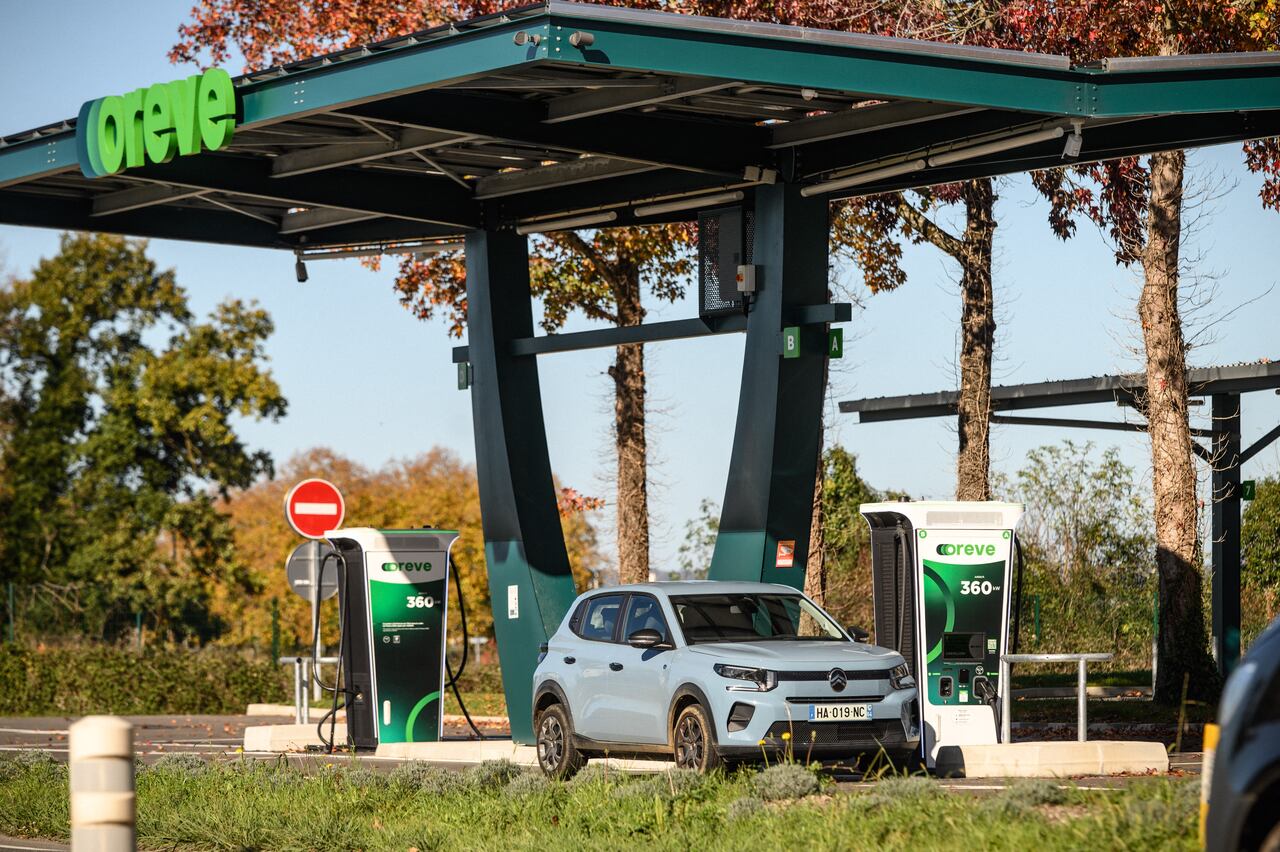
An electric Citroen charges in a country road in Pardies, France. A lack of charging infrastructure in Europe was part of automaker complaints urging that the 2035 all-electric rule be scrapped. (Quentin Top/Hans Lucas/AFP/Getty Images)
While Hoekstra characterized this as a “win-win” situation for everyone, critics view it as a diversion from a more ambitious strategy that could significantly reduce emissions in Europe.
“The world is transitioning to electric vehicles, and this will occur with or without Europe,” remarked Lucien Mathieu, director of the cars program at Transport & Environment, a coalition of NGOs. “By sticking to combustion engines and hybrids, Europe risks investing in technologies that will soon become obsolete.”
Balancing Ambition with Realism
Conversely, some analysts perceive today’s decision as a reasonable compromise, taking into account the current economic challenges faced by automakers.
“The EU seems to be adopting a pragmatic stance,” noted Joanna Kyriazis, director of policy and strategy at Clean Energy Canada. “Every nation with a domestic automotive sector is reassessing its policy framework to determine what is feasible and sensible.”
“Aiming for 100 percent is always a tricky target,” commented Gil Tal, director of the Electric Vehicle Research Center at the University of California, Davis. “Prohibiting gas cars might work well up to 90 percent, but the last 10 percent could be exceedingly expensive.”
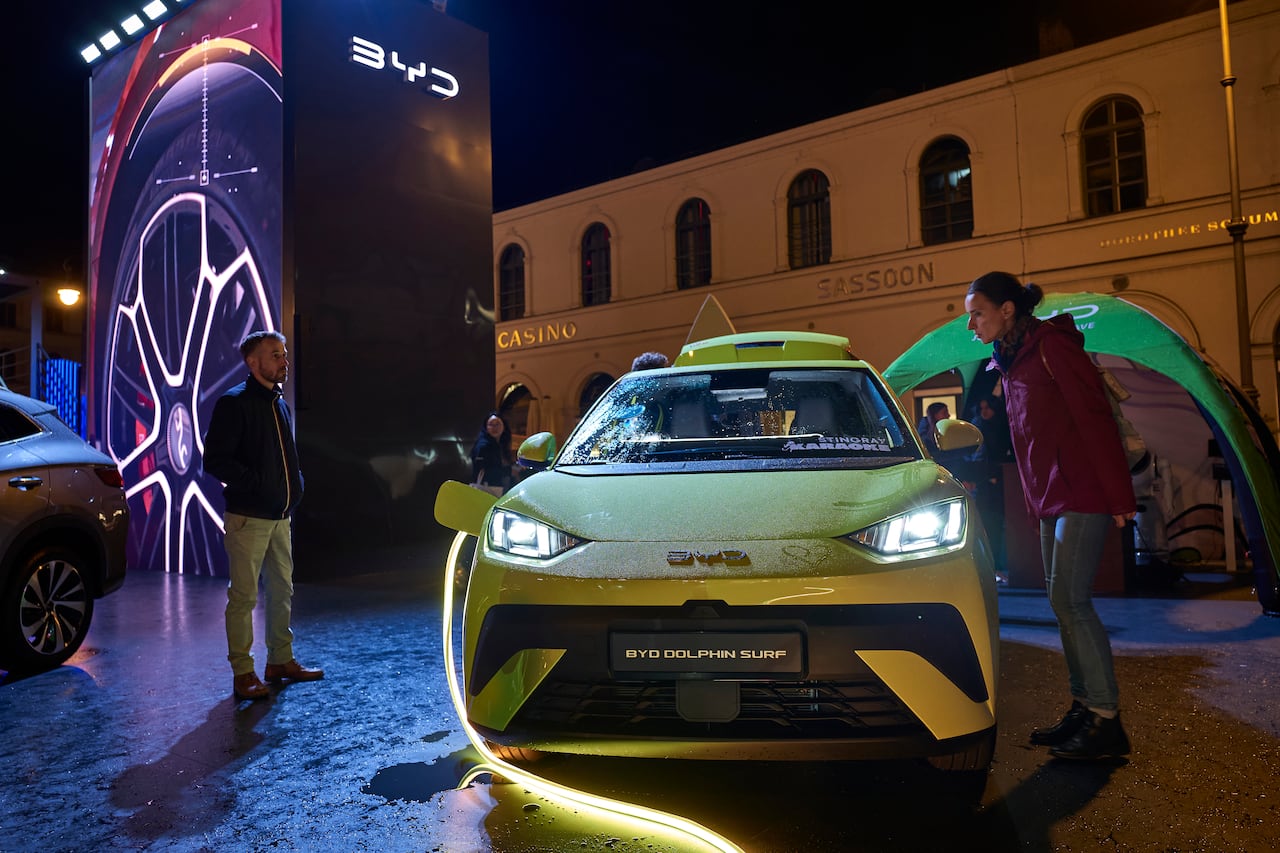
Chinese-made EVs, such as from BYD, have been a huge pressure on global automakers. They make up as much as 10 percent of EV sales in Europe. (Johannes Simon/Getty Images)
The EV Challenge
In the lead-up to Tuesday’s proposed changes, there had been significant lobbying efforts and pressure campaigns.
In a recent correspondence, six EU leaders advocated for greater inclusion of fuel-efficient vehicles to “advance our climate goals effectively while maintaining our competitiveness.” Conversely, a counterstatement, endorsed by hundreds of members of the electric vehicle sector in Europe, cautioned that weakening the goal could lead to “increased dependency, diminished influence, and a risk of falling irreversibly behind.”
The underlying theme in both letters was the looming presence of China, the undisputed global leader in electric vehicle manufacturing and sales.
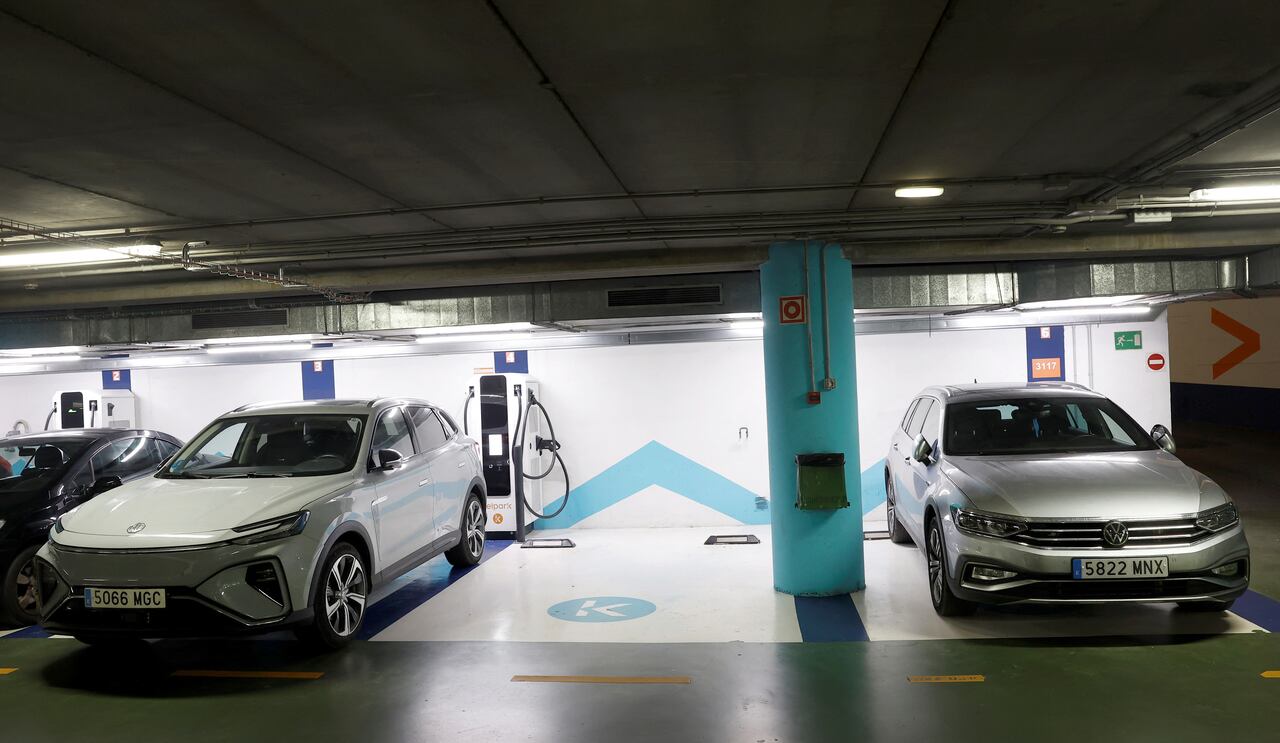
Chinese-made EVs are allowed in Europe, at a lower tariff rate than Canada and the U.S. (Vincent West/Reuters)
Kyriazis observes that while Chinese-made EVs are affordable and of high quality, their market dominance is not absolute. Although Europe permits their sale at a lower tariff rate compared to Canada and the U.S., they only represent about 10 percent of electric vehicle sales.
“The prevailing concern is that these EVs will dominate and undermine domestic manufacturers. Despite their popularity among consumers, they haven’t completely taken over yet,” Kyriazis explained.
However, others contend that any slowdown in Europe could create an opportunity for China.
“This is a global competition for electric vehicles,” Mathieu stated in an interview with CBC News from Brussels. “China is currently advancing rapidly, and Europe will struggle to catch up by investing in outdated technologies.”

U.S. President Donald Trump recently announced weaker fuel efficiency standards for gas cars, as a plan to make them cheaper. (Andrew Caballero-Reynolds/AFP/Getty Images)
Shift in Policy
The proposed changes today do not represent a complete reversal, in contrast to U.S. President Donald Trump’s cancellation of EV mandates and tax incentives as well as reducing fuel economy standards for gasoline vehicles. Nonetheless, analysts emphasize that this retreat will be closely monitored globally.
“It conveys mixed signals and a sense of uncertainty,” Mathieu articulated, adding that these proposals act as a guide for electric vehicle investments.
-
Ford retreats from EVs and takes big financial hit as Trump policies grip industry
-
Plug-in polluter? Why Canada may need to rethink ‘transition’ EV
“We recognize that hundreds of billions of euros are being invested in electric technology … all those investments could be jeopardized if we alter the targets during this transitional phase,” he added.
To alleviate tariff and trade challenges, Prime Minister Mark Carney has suspended Canada’s electric vehicle sales targets, which initially called for all new Canadian vehicle sales to be electric by 2035.
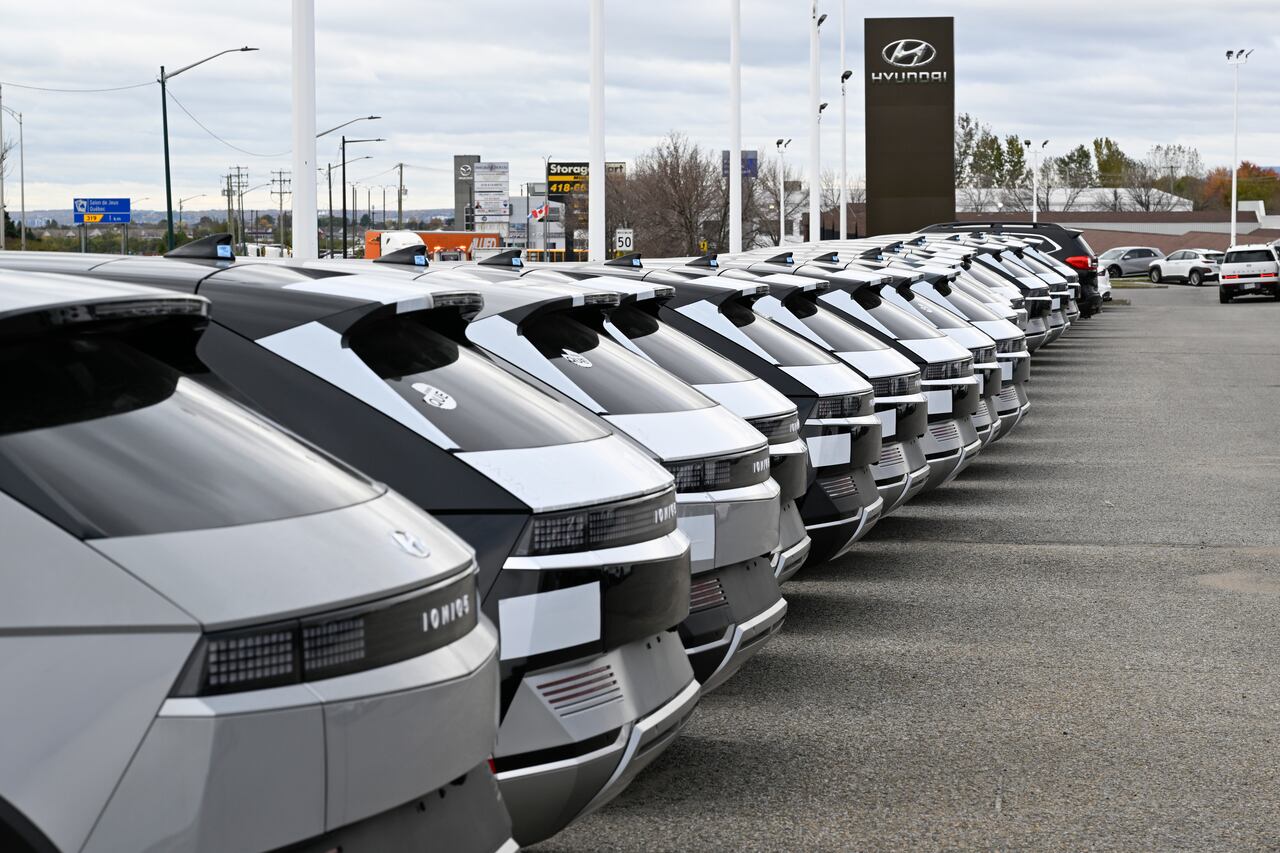
New electric cars are lined up at a Hyundai car dealership in Quebec City in 2024. Prime Minister Mark Carney in September paused Canada’s electric vehicle sales targets, which demanded all new Canadian car sales be electric by 2035. (Jacques Boissinot/The Canadian Press)
“Canada is currently at a pivotal moment,” Kyriazis remarked, indicating that it can either follow the U.S. model or make slight adjustments to its plans, similar to the EU’s approach. “I hope we can adopt a comparable strategy of refining the policy to adapt to the current situation while preserving a clear market signal and commitment to electrification.”
Experts concur that regardless of the path taken, transitioning away from gas vehicles is essential, despite the challenges that may arise along the way.
“Decarbonizing the light-duty vehicle sector is arguably the closest thing we have to a silver bullet,” Tal stated in an interview with CBC News.
“It represents the one policy, the one technology that can effectuate a significant impact.”
