

Workers in regulated professions across Alberta may soon be exempt from investigations by their licensing authorities regarding statements made outside of their working hours, pending the approval of a new legislative proposal.
On Thursday, Justice Minister Mickey Amery presented the Regulated Professions Neutrality Act, also referred to as Bill 13, to the legislature, following a commitment made last year to review the actions of regulators that have impacted free speech.
“When regulatory bodies start disciplining individuals merely for expressing their thoughts during personal time, that constitutes overreach — and at its most extreme, poses a direct threat to free expression,” Premier Danielle Smith stated during a press briefing on Thursday morning.
Experts in health law warn that such regulations could worsen the dissemination of medical misinformation and misalign Alberta’s professional regulations with those of the rest of Canada.
“This will restrict the capacity of professional regulators to safeguard the public,” remarked Lorian Hardcastle, who teaches law and medicine at the University of Calgary.
Smith referred to the legislation as “the Peterson bill,” in reference to psychologist Jordan Peterson, who faced disciplinary action in 2022 from the College of Psychologists of Ontario for comments he made online that the college deemed potentially “degrading” and damaging to the profession’s reputation.
The college mandated that Peterson undergo social media training, a decision he contested in court, until the Supreme Court of Canada opted not to hear his appeal.
Should Bill 13 be enacted, it would also restrict the types of training that regulatory bodies could enforce for their members. As outlined in the background information surrounding the legislation, regulators would be prohibited from mandating “cultural competency, unconscious bias, or diversity, equity, and inclusion training” as a requirement.
Training on political, historical, social, or cultural topics could only be required if deemed essential for the worker’s competence or ethics, as stated in the background information.
The proposed bill would permit regulatory bodies to discipline members for their behavior outside the workplace in specific scenarios, such as when an individual poses a threat of violence, demonstrates intent to harm a specific person, or engages in misconduct or sexual misconduct that breaches professional boundaries, or sends inappropriate communications to a minor.
The legislation would encompass over 100 regulated professions, including lawyers, engineers, nurses, teachers, doctors, architects, accountants, and licensed tradespeople.
At the time of publication, the government had not provided details regarding how much time regulatory bodies would have to adjust their bylaws and training requirements, nor when the law would come into effect if approved.
Initiative from UCP members
In 2023, members of the United Conservative Party voted to endorse a resolution aimed at confining professional disciplinary inquiries to actions conducted during work hours, thereby excluding personal lives from conduct codes.
Last year, Smith commented that regulatory colleges had “overstepped” in monitoring members’ public remarks and promised to introduce legislation to amend this.
-
Alberta premier pledges to protect right of professionals to express personal views
-
Alberta cabinet needs final say in health crises, Preston Manning’s COVID-19 panel says
On Thursday, Smith informed reporters that she had heard from physicians who are apprehensive about openly supporting the government’s prohibition on puberty blockers and gender-affirming hormone treatments for minors under 16 due to the risk of disciplinary action from the College of Physicians and Surgeons of Alberta.
Timothy Caulfield, a health law professor at the University of Alberta, noted that the government is promoting the idea of “brave voices being silenced by the overreach of regulators,” especially during the height of the COVID-19 pandemic.
Caulfield asserted that studies reveal the contrary — that the number of investigations into medical professionals accused of spreading misinformation represents a minuscule fraction of cases before health regulators.
“We know that health misinformation causes significant harm, particularly when it originates from healthcare providers,” he stated.
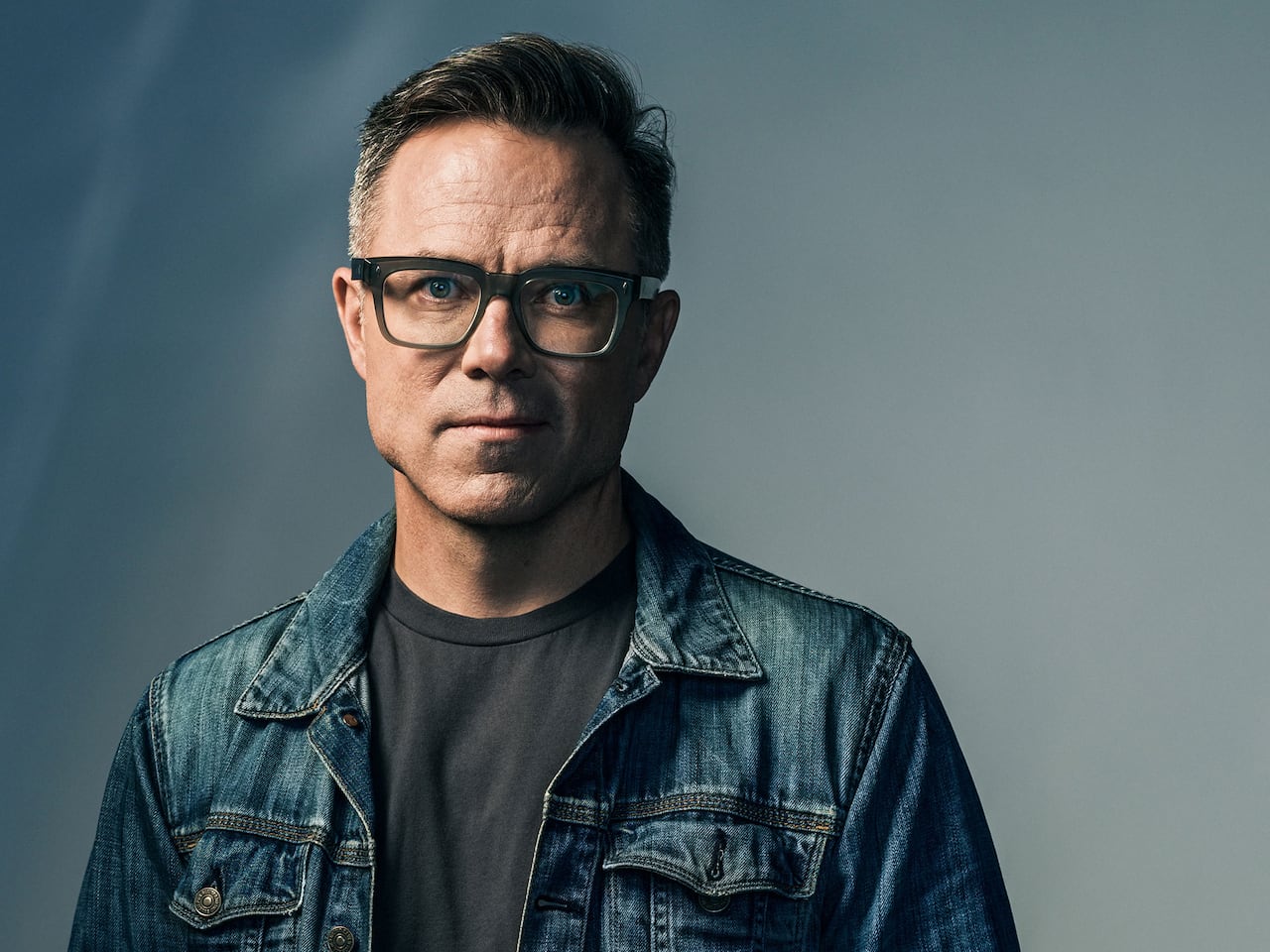
Health law researcher and author Tim Caulfield states that changes to professional regulation in Alberta could lead to an increase in medical misinformation. (Hasselblad H4D)
According to him, being a regulated professional is a privilege that brings power, but it should also entail responsibility.
Hardcastle emphasized that the views of individuals holding professional credentials are given more credibility, which means unexpected assertions from doctors or nurses will receive greater attention online.
“This places us in a significantly different situation compared to the rest of the country,” she said regarding professional regulation.
She noted that the requirement for regulatory bodies to enforce anti-racism training and similar educational programs is crucial for public safety.
Research indicates that patients from certain ethnic backgrounds often receive inferior healthcare and may experience poorer outcomes from medical treatments, she added.
Hardcastle commented that professions have typically been allowed to self-regulate because they are most knowledgeable about their fields, but she believes this legislation represents a significant overreach.
Smith remarked that scientific understanding and evidence evolve over time, causing best practices to shift. She expressed more concern about stifling debate than about the dissemination of information that may later be proven incorrect.
Bill fuels misconceptions, claims equity trainer
Marcie Hawranik, the founder and CEO of Canadian Equality Consulting in Calgary, expressed her disappointment on Thursday regarding the government’s misrepresentation of diversity and inclusion training.
She asserted that education on cultural diversity and unconscious bias enhances communication and helps avert conflicts and mistakes in the workplace. Furthermore, she believes it should be the regulators, not the government, who determine when professionals require such education.
“One of the many reasons these independent regulatory bodies exist is to keep politics out of professional practice,” Hawranik stated.
Alberta NDP justice critic Irfan Sabir described the bill as troubling, as it could permit individuals to express racist or hateful sentiments without repercussions in an increasingly diverse society.
“As usual, the government has not sought input,” he remarked. “No one was advocating for this except for the UCP’s own fringe base.”
A representative from the College of Physicians and Surgeons of Alberta indicated that the organization would need time to assess the implications of the bill, especially regarding how it will fulfill its responsibilities.
Elizabeth J. Osler, CEO and executive director of the Law Society of Alberta, shared a statement with CBC News about the proposed legislation on Thursday, highlighting that the organization “has a duty to protect the public interest in the regulation of legal services.”
She stated that the organization would conduct a comprehensive review of the new legislation to “fully comprehend its impact on the Law Society [of Alberta], the public, and the legal profession in Alberta.”
