


Amid a severe drought in Iran, Kaveh Madani expresses grave concerns about the water crisis in his home country.
“We’re facing a critical situation with only a few days or weeks of water supply left for Tehran,” mentioned the director of the UN University Institute for Water, Environment and Health in a conversation with As It Happens host Nil Koksal.
The looming “day zero,” when the city’s taps will run dry, is approaching rapidly, according to Madani, who communicated from Richmond Hill, Ont.
Iran, with a population exceeding 90 million, confronts an unparalleled water and energy emergency as reservoir levels plummet to historic lows, jeopardizing both drinking water and electricity provisions.
The country grapples with its sixth consecutive year of drought, leading to approximately 10% of Iran’s dams being nearly depleted nationwide.
Intermittent water access has been a challenge, prompting Iran’s president to consider the evacuation of the capital city.
“If there’s no rainfall in Tehran by late November, water rationing may become necessary,” stated Iran’s President Masoud Pezeshkian recently. “And if the situation persists, evacuation may be unavoidable.”
Root Causes
Madani highlights that Iran’s “water bankruptcy crisis” is not solely a consequence of insufficient rainfall but is a longstanding issue. The former deputy head of Iran’s Department of Environment attributes this crisis to decades of mismanagement, lack of foresight, and excessive dependence on groundwater resources.
With more than 70% of Iran’s population concentrated in major urban centers, such density poses significant challenges, as per Madani.
He points out the inefficiencies in the agricultural sector, which consumes about 90% of Iran’s freshwater, especially through inefficient irrigation practices in arid regions.
Despite the water-intensive farming, generous water allocations persist to sustain the sector and associated employment opportunities in rural areas.
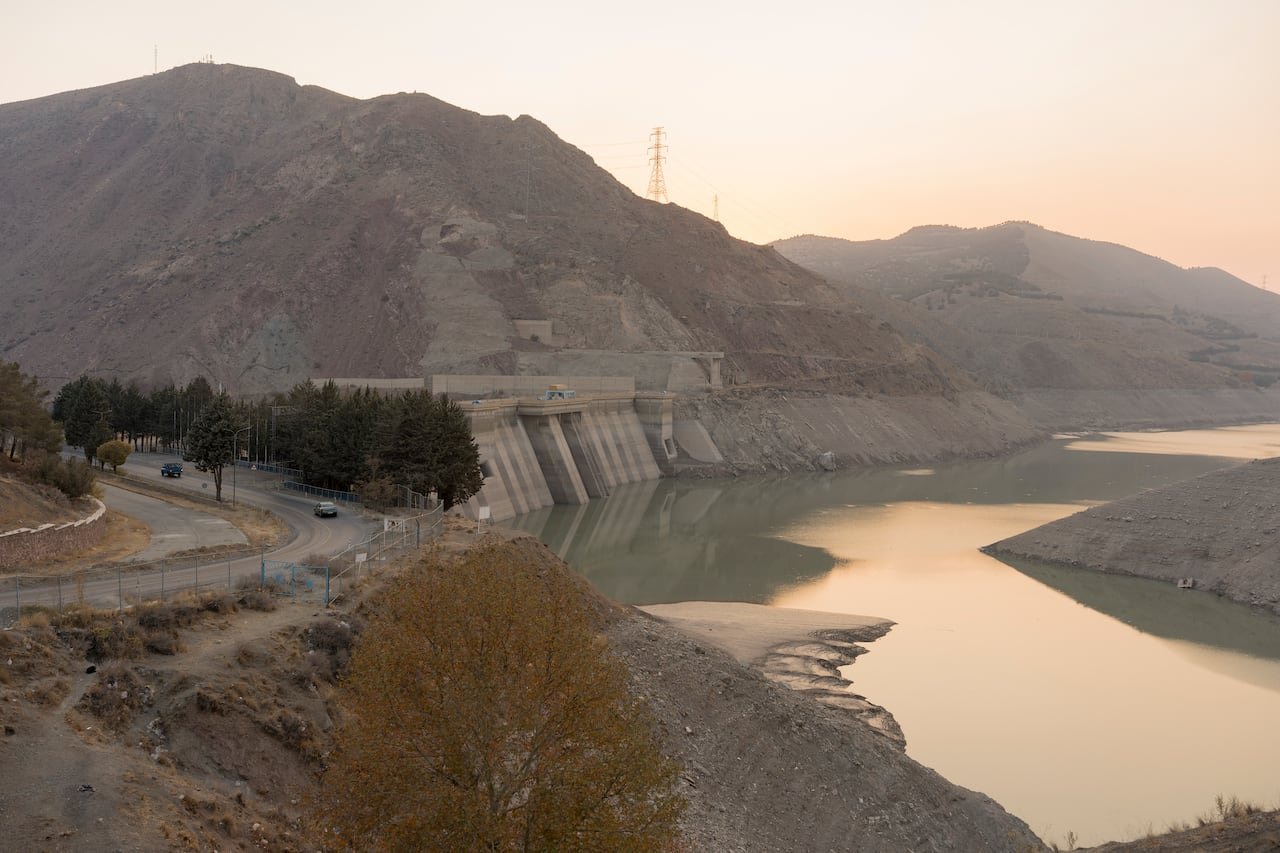
Recently, an agriculture ministry official, Gholamreza Golmohammadi, emphasized the urgency for the agricultural sector to modernize, citing the depletion of aquifers through outdated practices leading to power disruptions.
Furthermore, Iran heavily relies on hydropower and fossil fuels for its energy needs. As water sources diminish, power generation has declined, resulting in operational shutdowns at certain facilities, reports the Associated Press.
Madani notes that the ecological impact is exacerbated by Iran’s geopolitical conflicts and emphasizes the necessity for reducing the economy’s reliance on groundwater resources by creating alternative livelihood opportunities for farmers and rural populations.
