

On Sunday, U.S. President Donald Trump announced that Jay Clayton, the director of national intelligence, has been appointed as the administration’s artificial intelligence czar. His role will involve coordinating the government’s initiatives to uphold America’s leadership in this technology.
Trump, who advocates for the term “super intelligence” to replace AI, stated that Clayton will lead the newly established “Super Intelligence Force” (SIF). This group will manage the government’s interactions with consumers, religious organizations, AI firms, and various other stakeholders.
In a message posted on his Truth Social platform, Trump expressed that SIF’s objective would be to “ensure that America remains at the forefront of Super Intelligence” while also “safeguarding the interests and enhancing the lives of all Americans.”
-
How AI could usher in a ‘new scientific golden age’ — if it doesn’t kill us all first
-
Video
Trump praises AI companies for self-policing plan, but critics want more oversight
This announcement substantiates a report from the Wall Street Journal, where Clayton, who took on the role of national intelligence chief in August, mentioned that Trump had selected him to spearhead the administration’s efforts to keep the U.S. leading in AI.
“The danger of not being the leader is significant,” Clayton stated to the newspaper.
Clayton indicated that the task force would have a period of 120 days to compile a report that evaluates the risks and prospects associated with AI and to recommend the federal government’s appropriate role.
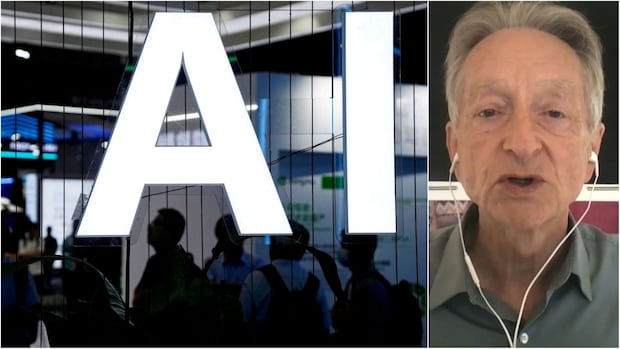
U.S. President Donald Trump hosted a summit in Washington with leading figures in AI development. He has downplayed warnings regarding artificial intelligence, emphasizing the necessity of keeping ahead of China in the AI race. Geoffrey Hinton, regarded as the ‘godfather’ of AI, claims Trump ‘doesn’t really understand’ AI and is ‘ill-advised’ on the subject.
Concerns Regarding AI Safety
In recent weeks, AI safety has emerged as a pressing concern, with some researchers cautioning that developers of the technology believe it could pose a lethal threat to humans within the next decade. This has prompted alarm among numerous lawmakers from both the Democratic and Republican parties, who are calling for increased action.
Trump seems to have adopted a lenient approach to AI regulation, asserting that too much oversight could diminish competitiveness against China. He stated on Tuesday that he is not interested in collaborating with Chinese President Xi Jinping on the governance of AI technology.
According to the Journal, Clayton’s task force will evaluate risks associated with AI and existing government reporting channels for breaches, hacks, and other incidents. They will also suggest methods to enhance the federal government’s response capabilities under current authorities.
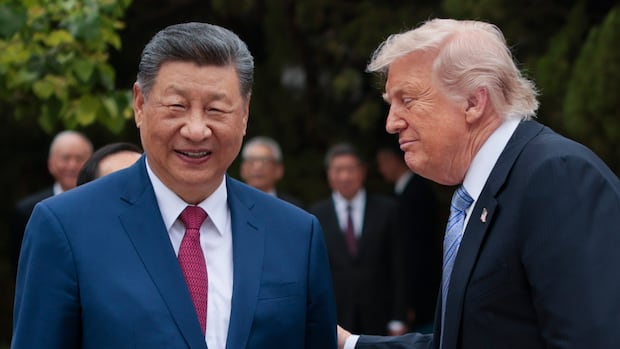
Economic officials from China and the U.S. have initiated discussions ahead of a meeting between President Donald Trump and President Xi Jinping, where AI safety is anticipated to be a significant topic.
This marks the second occasion that Trump has appointed an advisor to oversee AI-related matters throughout the administration. David Sacks, a venture capitalist, previously held the position of AI czar at the outset of Trump’s second term.
Alongside Clayton, the leaders of the task force will include Andrew Ferguson, chair of the Federal Trade Commission; Emil Michael, chief technology officer at the Pentagon; and Scott Kupor, director of the Office of Personnel Management, as noted by Trump.
The task force will report directly to the president and Susie Wiles, the White House chief of staff, Trump indicated.
