

Prime Minister Mark Carney and Alberta Premier Danielle Smith have reached an agreement on the key elements of a memorandum of understanding, which would allow Alberta specific exemptions from federal environmental regulations and provide political backing for a new oil pipeline to the British Columbia coast, according to information obtained by CBC News.
A formal announcement regarding the agreement is anticipated during a joint press conference featuring Carney and Smith in Calgary on Thursday.
This arrangement is expected to be conditional upon Alberta adopting a more rigorous industrial carbon pricing framework and committing to a significant investment in carbon capture through the Pathways Alliance, representing oilsands companies, as per sources who disclosed information to CBC News.
Multiple sources familiar with the initiative spoke to CBC News but were not authorized to make public statements prior to the release of the memorandum of understanding (MOU).
-
Ottawa, Alberta expected to sign new energy sector deal on Thursday: source
-
Ottawa and Alberta in formal talks to reset relationship after years of acrimony
This landmark agreement may redefine the dynamics between the federal and provincial governments, which have been in conflict for an extended period. The announcement is expected to be accompanied by a strong public relations campaign, featuring an event that includes the Calgary Chamber of Commerce, the prime minister, the provincial premier, and various Alberta politicians.
The arrangement is likely to include exemptions for Alberta from federal greenhouse gas regulations that it has resisted for years, such as Ottawa’s net-zero clean electricity standards. The proposal would permit Ottawa to suspend these regulations if Alberta commits to enhancing its industrial carbon pricing.
Implementing an effective carbon price on major polluters, including the oil and gas sector, is widely recognized by climate policy experts as a crucial method to diminish harmful emissions.
Should these conditions be met, it could render the federal government’s proposed emissions cap on oil and gas unnecessary, potentially leading to its withdrawal. The Carney administration argued that the cap would no longer be relevant in its Climate Competitiveness Strategy outlined in the 2025 budget.
The budget also indicated that the federal government will amend the Competition Act to address companies that engage in misleading environmental advertising, commonly referred to as greenwashing.
The Alberta government and industry representatives have requested the repeal of these regulations.
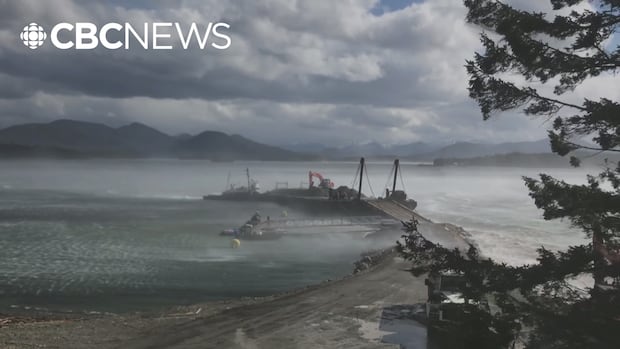
The forthcoming agreement is expected to emphasize the necessity for Alberta to engage in negotiations with the B.C. government as it progresses on plans for a pipeline to transport oil to the northwestern coast.
Reports from CBC News and other outlets have indicated that the energy agreement is expected to contain provisions regarding a route for an oil pipeline from Alberta to northwest B.C. and exemptions to the existing ban on oil tankers from the northern tip of Vancouver Island up to the Alaska border.
The MOU is also anticipated to address the importance of Indigenous ownership and equity, as well as the need for trilateral discussions involving B.C.
B.C. Premier David Eby informed the media that he had a conversation with the prime minister on Monday morning, who indicated that the specifics were yet to be finalized.
-
B.C. Premier David Eby blasts ‘secret’ talks on proposed North Coast pipeline
-
Greenwashing laws are changing. Businesses are relieved, but environmentalists have concerns
Adrian Dix, B.C.’s Minister of Energy and Climate Solutions, remarked that the agreement anticipated on Thursday revolves around a speculative pipeline without a defined route or confirmed buyers.
“The reason this is an MOU … is there isn’t a project in place,” Dix stated to reporters.
He also noted that Smith is scheduled to address her party’s members at a United Conservative Party conference in Edmonton this weekend.
“The timing is important for Alberta because, evidently, there is a political convention this weekend. And apparently Alberta needs to consolidate the right,” he added.
During a parliamentary committee meeting on Monday, Natural Resources Minister Tim Hodgson was questioned about whether the government would consider an exemption to the tanker ban.
“We have communicated clearly with proponents. If they have the backing of First Nations and relevant jurisdictions, we will collaborate with them to overcome any existing obstacles,” he stated.
The Alberta government did not provide further details beyond what was shared with CBC News.
“We anticipate having more information to share in the coming days,” remarked Sam Blackett, a spokesperson for the Alberta premier.
The agreement will also highlight the importance of advancing the $16.5-billion Pathways Alliance carbon capture and storage initiative.
This proposal by a consortium of oilsands companies aims to capture greenhouse gas emissions from facilities located in northern Alberta and transport them via pipeline to an underground storage site near Cold Lake, Alberta.
Early indications regarding the MOU suggest a “historic betrayal of Canada’s climate commitments and Indigenous rights,” according to Keith Stewart, senior energy strategist with Greenpeace Canada.
“The carbon emissions generated from expanding oil production to accommodate a large new pipeline will negate any potential reductions that could be achieved.”
