

Canadian citizens should prepare for a gradual influx from the United States, as per experts.
The risk stems from various types of ticks carrying harmful pathogens seeking to establish themselves in Canada.
According to official data, Canada currently hosts over 40 tick species.
One of the most recognized ticks is the blacklegged tick, also known as the deer tick, which transmits the bacteria responsible for Lyme disease. Symptoms typically include fever, fatigue, and a distinctive “bull’s-eye” rash. If untreated, it can lead to severe complications affecting the joints, heart, and nervous system.
Heading the newly opened Canadian Tick Research and Innovation Centre at Acadia University in Wolfville, N.S., is Nicoletta Faraone. The center’s mission is to comprehend, prevent, and manage ticks and tick-borne diseases.
Expressing widespread concern, Faraone notes, “There is significant alarm and fear surrounding the transmission of tick-borne illnesses. As of now, there is no Lyme vaccine, despite the knowledge that ticks carry multiple pathogens. Therefore, a Lyme vaccine may not be the most effective defense against these threats.”

Experts warn that different tick species carrying concerning pathogens are migrating from the northern U.S. at a pace of about 50 kilometers annually. While some have been sighted, they have not yet established a foothold in Nova Scotia.
Of particular worry is the lone star tick, capable of transmitting a pathogen causing a severe meat allergy in those bitten.
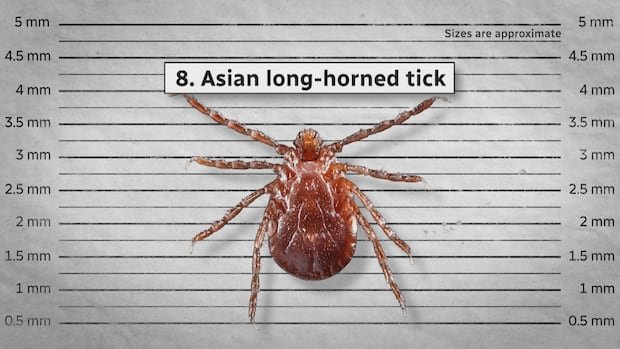
Canada already harbors 40 tick species, with additional varieties expected to migrate north. CBC’s Tom Murphy visits the Canadian Tick Research and Innovation Centre (CTRIC) to delve into the evolving risks.
The lone star tick has already firmly established itself in Maine. Patty O’Brien-Carrier, a dedicated gardener in Harpswell, suffered a lone star tick bite, developed a severe meat allergy, and experienced anaphylactic shock after consuming beef.
Detailing her experience, O’Brien-Carrier explains, “I become extremely itchy, breaking out in hives all over. Subsequently, my breathing becomes increasingly labored to the point of near suffocation. It obstructs my airway to the extent that breathing becomes impossible. Without immediate assistance, death is imminent.” She stresses the importance of educating oneself about ticks.
The research facility at Acadia intends to introduce the lone star tick and other species into a secure environment for analysis. Presently, it is providing American dog ticks with blood through a device simulating human skin.
For reproduction, ticks require blood. Last month, researchers successfully raised one to maturity, which subsequently gave birth — a groundbreaking milestone for
