

Orcas in the Gulf of California have been observed working together to shatter deceased sunfish into fragments.
In this process, one orca seizes the fish’s short tail, known as the clavus, and releases it just as a second orca charges at high speed, creating a dramatic explosion of fish debris.
In a recent study published this week in the journal Frontiers of Ethology, researchers from the U.S., Saudi Arabia, and Mexico detail this behavior and propose possible reasons for it.
Lead author Kathryn Ayres speculated, “This might assist younger orcas in feeding more effectively, or it may simply be for their amusement,” highlighting that orcas are known to engage in playful interactions with their food.
The prey involved was a sharp-tail sunfish, capable of reaching lengths of up to three meters and weighing as much as two tonnes. The fish was already deceased, with its internal organs removed by the orcas prior to the ramming event.
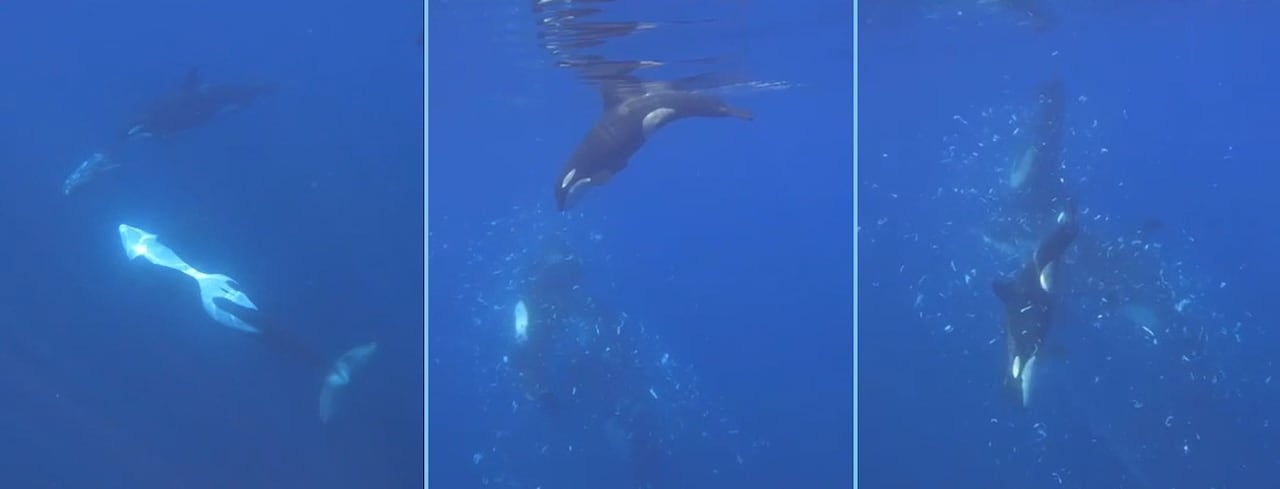
Stills captured from video illustrating the ‘hold-to-ram’ behavior seen in orcas in the Gulf of California. (Kathryn Ayres)
While the adult orcas were responsible for the smashing, the smaller orcas consumed most of the resulting pieces, as the adults concentrated on the larger portions that remained intact.
This behavior was initially recorded and filmed by Ayres, a scientist with the U.S.-based ocean conservation organization Beneath the Waves in July 2024. A similar occurrence was documented in September 2025 in the same area by Héctor Franz, a digital creator involved in ecotourism. Erick Higuera, co-author of the study and executive director of Orcas México, informed Smithsonian magazine that he had previously witnessed similar behavior in that region in 2021.
The researchers are uncertain if the incidents involved the same orcas, as the clarity of the footage was insufficient for identification.
Since they have not observed other sunfish breaking apart in response to strong impacts, the researchers proposed that this might be a “species-specific structural response.” They noted that the clavus of this species is more prominent compared to other sunfish species, facilitating its positioning and stability for breaking.
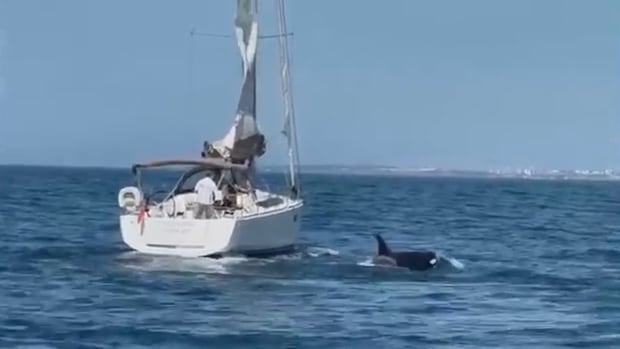
A pod of young orcas recently rammed two boats off the coast of Portugal, resulting in one of them sinking. Experts suggest this behavior was playful, though it caused quite a stir.
Orcas have been previously documented tearing apart various types of prey to share with their young.
Marine ecologist Robert Pitman from Oregon State University stated to the New York Times that this smashing technique might enable them to access the meat without damaging their teeth on the fish’s scales.
Reports have indicated that orcas have been ramming boats off the coast of Spain and Portugal, an action that scientists believe may be playful. However, the act of ramming prey to break it apart had not been previously observed.
“They are among the most recognizable marine predators globally, yet they continue to astonish us,” Ayres remarked.
