


How do great apes maintain harmony? A gentle touch, an embrace, or even a bit of playful behavior can be quite beneficial.
Recent research indicates that both chimpanzees and bonobos utilize physical affection to foster “social tolerance” and circumvent unnecessary disputes before potentially tense moments.
Their diplomatic strategies encompass hugs, kisses, gentle pats, and even playful nibbles.
“All of these and more,” stated lead researcher Jake Brooker during an interview with As It Happens host Nil Kӧksal. “They also engage in a considerable amount of genital contact.”
The results — published Wednesday in the journal Proceedings of the Royal Society B: Biological Sciences — provide fresh insights into how our closest relatives sustain robust social connections during challenging times.
Pre-snack cuddles
Brooker, a psychologist and researcher on great apes at Durham University in England, points out that it was already known that great apes offer comfort through positive touch after conflicts.
“When an individual appears to be in distress, we often observe that many others will approach to offer comforting contact, much like humans do,” he noted.
However, he mentions that researchers began to observe these affectionate interactions occurring in other stressful situations as well.
They tended to become particularly affectionate when faced with threats from outside groups or just prior to mealtime, according to Brooker.
“Great apes experience a significant amount of stress in their lives,” he explained. “Specifically, they often encounter considerable tension and stress within their groups, especially regarding competition for resources.”
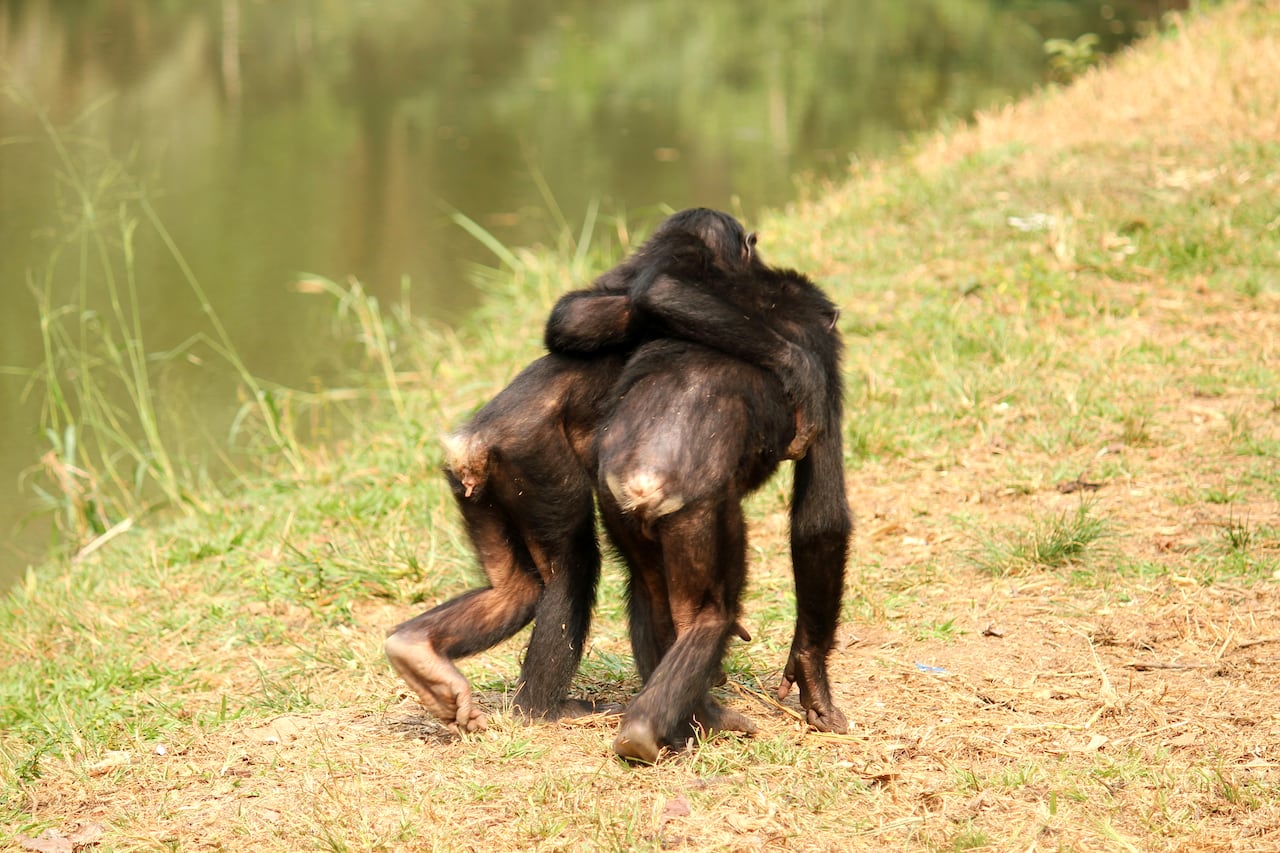
Two orphan juvenile bonobos in the study wrap their arms around each other. (Zanna Clay/Lola ya Bonobo Sanctuary)
To investigate this behavior, the researchers examined five groups of semi-wild bonobos and chimpanzees residing in great ape sanctuaries in the Democratic Republic of Congo and Zambia.
They initiated a feeding schedule with peanuts at regular intervals, allowing them to anticipate when food would be available, and then observed the interactions in the five minutes leading up to mealtime.
“We noticed that they engaged in many of these behaviors right up until the moment of feeding,” Brooker stated. “Moreover, we found that those who exchanged the most contact were also the ones more likely to share in the food afterward.”
By establishing trust beforehand, the apes can prevent conflicts over food, the research concludes. This, in turn, enables them to consume more food and extend their eating time.
-
Chimps are sticking grass and sticks in their butts, seemingly as a fashion trend
-
Great apes get a kick out of ‘playfully teasing’ each other, study finds
Yet, similar to humans, social dynamics are not always straightforward.
One group of chimpanzees deviated from the observed trend, showing no link between pre-meal cuddling and harmonious feeding. The researchers suggest this may indicate that unique group histories and previous conflicts influence how positive touch is applied within a group.
Chimps beat a bad rep
Julie Teichroeb, a primatologist at the University of Toronto, finds it particularly intriguing that both chimpanzees and bonobos exhibited this behavior of positive touching.
This is noteworthy because, according to her, chimps are often seen as significantly more aggressive compared to their bonobo relatives.
For instance, bonobos have been recognized for their ability to collaborate with external groups, while chimpanzees frequently engage in violent rivalries, even leading to civil wars.
“These two species are often contrasted due to their significant differences in aggressive behavior towards outsiders, so it’s fascinating that they both employ touch similarly to enhance tolerance within their groups,” Teichroeb, who did not participate in the research, explained via email to CBC.
“This enhances the likelihood that our common ancestors also utilized similar strategies to mitigate social conflicts.”
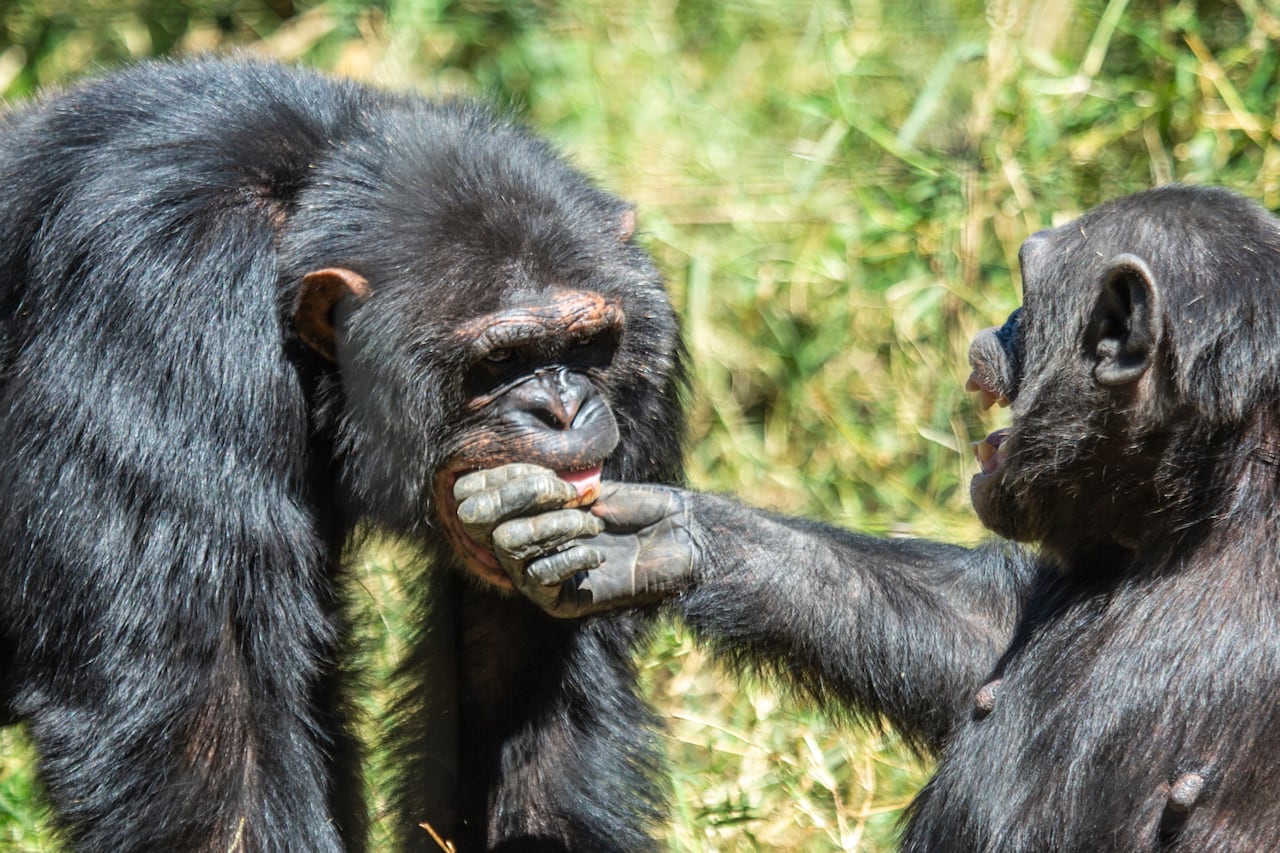
Male chimpanzee Sims, left, gently nibbles on female Careen’s hand, a form of contact common during tense competitive moments in chimpanzees. (Jake Brooker/Chimfunshi Wildlife Orphanage Trust)
Interestingly, the study revealed that chimps tended to engage in more affectionate behaviors than bonobos, often involving higher-risk interactions, such as gentle bites or inserting fingers into each other’s mouths, particularly among males.
“This indicates that species with higher aggression levels may need to demonstrate greater reassurance to foster social tolerance,” Teichroeb noted.
The lesson? Hug your pals
Brooker believes there is a valuable lesson for humans in this behavior.
“I recall that in school, it was often discouraged for boys to engage in any form of physical contact with their friends, almost to the point of being stigmatized,” he remarked.
“However, if it’s between friends who share a deep understanding, such contact can significantly enhance communication and bonding. It’s possible that people are missing out on this.”
