

On Thursday, a bill in British Columbia aimed at expediting the construction of a multibillion-dollar power transmission line, which will significantly increase the electricity supply from Prince George to Terrace, successfully passed its third reading in the provincial assembly.
The North Coast Transmission Line, a significant initiative that Premier David Eby has made a priority for his government, is designed to enhance electrical capacity in northern British Columbia to support vital mineral projects and LNG facilities.
Known as Bill 31 or the Energy Statutes Amendment Act, 2025, the legislation passed with the backing of the B.C. NDP’s slim majority in the legislature, despite efforts from the Official Opposition to delay its progress and the B.C. Green Party’s attempts to propose amendments.
“New transmission infrastructure is essential to enable new, clean economic growth,” stated the government when the line was first introduced as part of 18 key projects aimed at enhancing the province’s electricity network and diversifying its economy.
This initiative is a fundamental element of Eby’s Look West jobs strategy, unveiled earlier this week.
The North Coast Transmission Line has also been identified by Prime Minister Mark Carney as one of the key projects that will undergo expedited permitting and approval processes.
The projected cost of the line is around $6 billion, with the Canada Infrastructure Bank set to provide B.C. Hydro with a loan of $140 million for the endeavor.
“The North Coast Transmission Line is crucial for energizing B.C.’s next wave of industrial development, and we are pleased to progress it in collaboration with First Nations and the province,” remarked Charlotte Mitha, president and CEO of B.C. Hydro in an October statement.
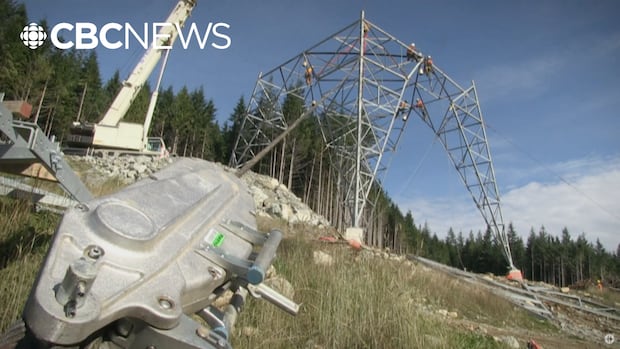
From the prime minister to the premier, there’s a major political push to fast-track the construction of B.C.’s North Coast Transmission Line. The CBC’s Lyndsay Duncombe breaks down the power line hype and why the province could be on the hook for a big chunk of its $6 billion price tag.
During the legislative process, the B.C. Conservatives attempted to delay the bill by introducing a hoist motion, which would have postponed the bill’s advancement by at least six months, but this effort was unsuccessful.
Leader John Rustad contended that the government does not require this legislation to construct the North Coast Transmission Line and raised concerns about whether British Columbia possesses the necessary electrical capacity to support it.
“The NDP has finally admitted their true intentions: they support a transmission line but will obstruct every associated project,” he stated in a post on X on Thursday.
Greens seek transparency
The two MLAs from the B.C. Green Party, Jeremy Valeriote and Rob Botterell, supported the bill up to the third reading, aiming to propose amendments that would enhance “transparency and accountability [and] establish clear criteria for the allocation of electricity by a public utility.”
When their amendments were not accepted, the Greens voted against the bill.
“The B.C. Greens want the people of British Columbia to benefit from the province’s clean energy potential,” Valeriote stated in a release. “However, it has become evident that the premier and minister are advancing the North Coast Transmission Line primarily as a public subsidy for LNG projects, rather than as a long-term commitment to B.C.’s clean energy future.”
The Greens also expressed concerns that First Nations along the proposed route had not been adequately consulted and were given a “take it or leave it” offer regarding a project that the government is determined to push through.
“With Bill 31 now enacted, the government can exercise its discretion — potentially influenced by lobbyists or industry pressures — in deciding who receives power and who doesn’t, all without independent oversight,” Valeriote remarked.
Some Indigenous nations, including the Nisga’a Nation, as well as economic entities associated with them, like K’uul Power, have voiced their support for the initiative.
