

Early predictions suggest the potential emergence of a “super” El Niño in the upcoming months, which could elevate the global temperature for the year and intensify extreme weather events.
Several climatic models are indicating a robust El Niño anticipated to initiate in June or July, peaking in November. There are projections of ocean temperatures in a critical Pacific region reaching 2 degrees Celsius above the norm, with some models foreseeing even higher deviations.
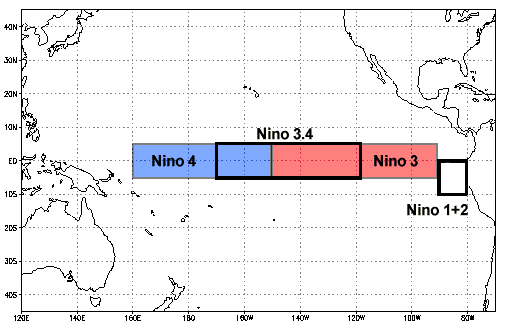
El Niño is a component of the broader El Niño-Southern Oscillation (ENSO) system, influencing weather patterns globally. Warmer waters in the specific Pacific region known as Niño 3.4 trigger El Niño, while colder temperatures lead to La Niña, with a neutral phase also present.
The U.S. National Oceanic and Atmospheric Administration (NOAA) released its monthly ENSO update, indicating an 82% likelihood of El Niño development between May and July, with a 96% probability of continuation from December to February. However, uncertainties persist regarding its peak intensity.
Under normal circumstances, trade winds carry warm water from South America to Asia in the Pacific Ocean. During El Niño, these winds weaken, disrupting the oceanic circulation pattern.
Despite the potential for a significant or ‘super’ El Niño this year, experts suggest minimal impacts on Canada during the summer, emphasizing the global repercussions of a strong El Niño event.
Canada typically experiences the most pronounced effects of El Niño during winter months, leading to notably warmer winters in regions like Eastern and Central Canada.
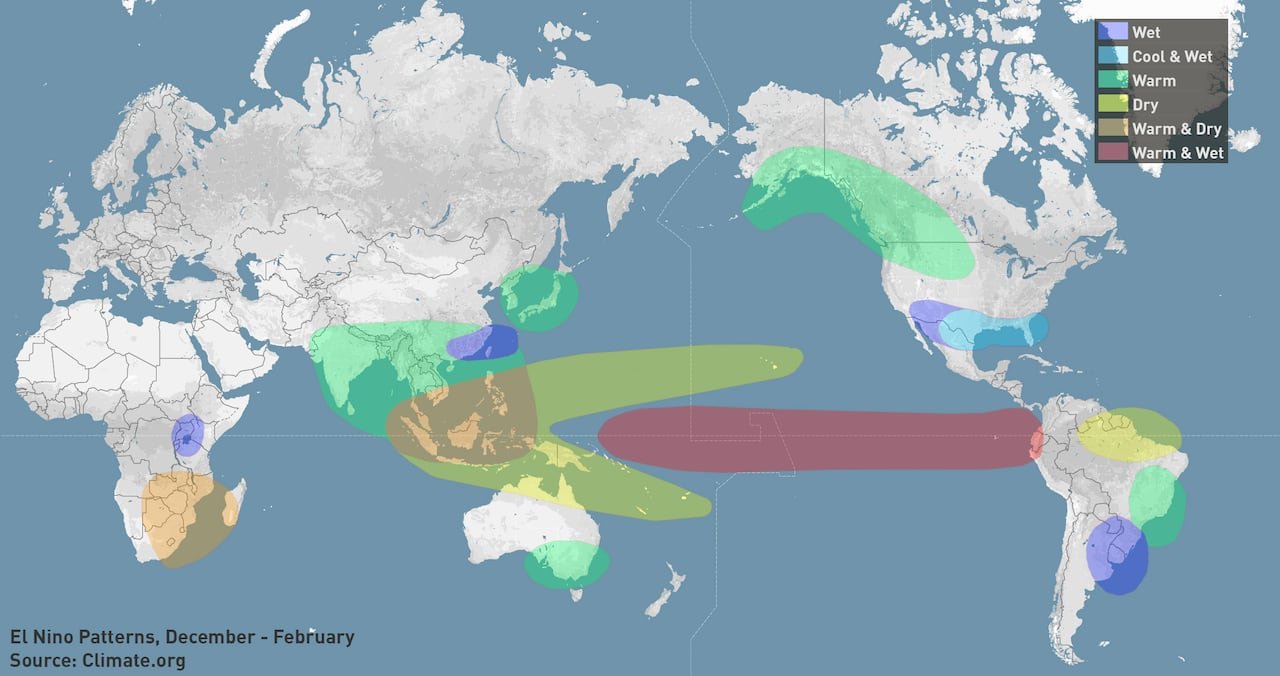
Notably, Canada experienced its warmest winter on record during the last strong El Niño, with a 1.5-degree Celsius temperature anomaly in the El Niño 3.4 region. Projections suggest the upcoming El Niño may reach temperatures closer to 2 degrees Celsius or higher, following the pattern of the previous super El Niño in 2015-2016.
Experts affirm that while El Niño may bring extreme conditions later in the year, the primary concern remains climate change, which continues to exacerbate global warming trends, potentially leading to record-breaking temperatures in the near future.
Climate scientists emphasize the urgent need to address climate change by reducing fossil fuel emissions to mitigate the impacts of extreme weather events and global temperature rise.
The occurrence of a super El Niño is expected to amplify weather extremes globally, with potential implications for Canada such as a quieter hurricane season in Atlantic Canada but an increased wildfire risk in regions experiencing prolonged drought conditions, like the West.
Experts warn of the escalating wildfire danger in Canada and other regions linked to climate change, urging proactive measures to address the growing environmental challenges.
