

Schools of invasive goldfish — some reaching the size of dinner plates — are becoming a serious issue in Alberta.
The provincial government is raising concerns about the substantial threats to native ecosystems posed by the release of goldfish into Alberta’s waterways.
“Goldfish belong in aquariums, not in Alberta’s waters. Please do not release them,” stated provincial Environment Minister Grant Hunter in a news release on Monday.
Goldfish have been found in over 100 locations across Alberta, and according to Nicole Kimmel, the province’s aquatic invasive species expert, new sites are being added annually.
“This isn’t a result of people flushing them down toilets and them finding their way into the waterways,” she explained to CBC News. “Individuals are deliberately releasing them into our water systems, and they are surviving the winters, thriving, and breeding.”
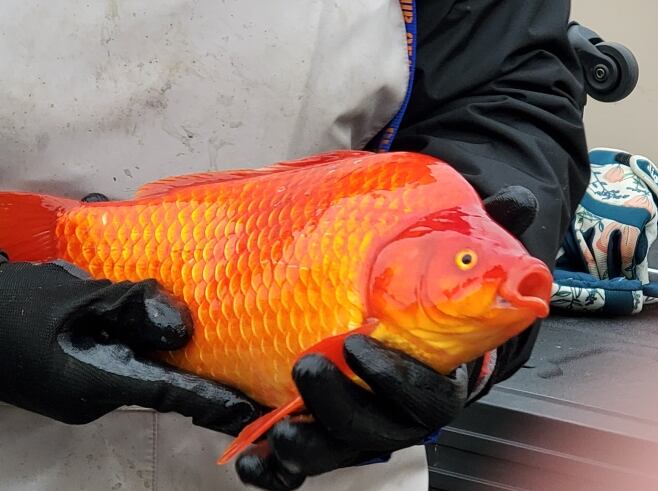
A goldfish extracted from a stormwater management pond in Lethbridge. (City of Lethbridge)
The province’s “Don’t Let It Loose” initiative seeks to prevent the unlawful release of species into waterways, an offense that could incur fines of up to $100,000 and/or a year in prison.
“Never release anything into the water that it didn’t originate from,” Kimmel advised.
“People might believe they are just discarding goldfish, but in reality, they may also be introducing snails, fish diseases, and plant fragments that can also dominate a water body in Alberta.”
- These aquatic invaders pose a significant threat in Alberta
- Alberta combats ‘tiny invasive species’ with mandatory watercraft inspections
Goldfish can significantly endanger native aquatic ecosystems.
“They are highly adaptable and can consume anything that fits in their mouths,” Kimmel noted.
In contrast, many native fish are more selective regarding their diet and breeding habitats.
Goldfish can also endure Alberta’s severe winters, and a single goldfish can generate approximately 40,000 offspring within just three years.
“These competitive advantages allow [goldfish] to flourish,” Kimmel remarked.
Goldfish are ‘global invaders’
The issue of invasive goldfish is not confined to Alberta.
“They are global invaders,” stated Nicholas Mandrak, a biology professor at the University of Toronto and an expert on invasive species.
“They can survive in extreme conditions. I’ve caught them in Siberia, in lakes that freeze a meter thick in winter … thus, they are found widely in Canada and around the world.”
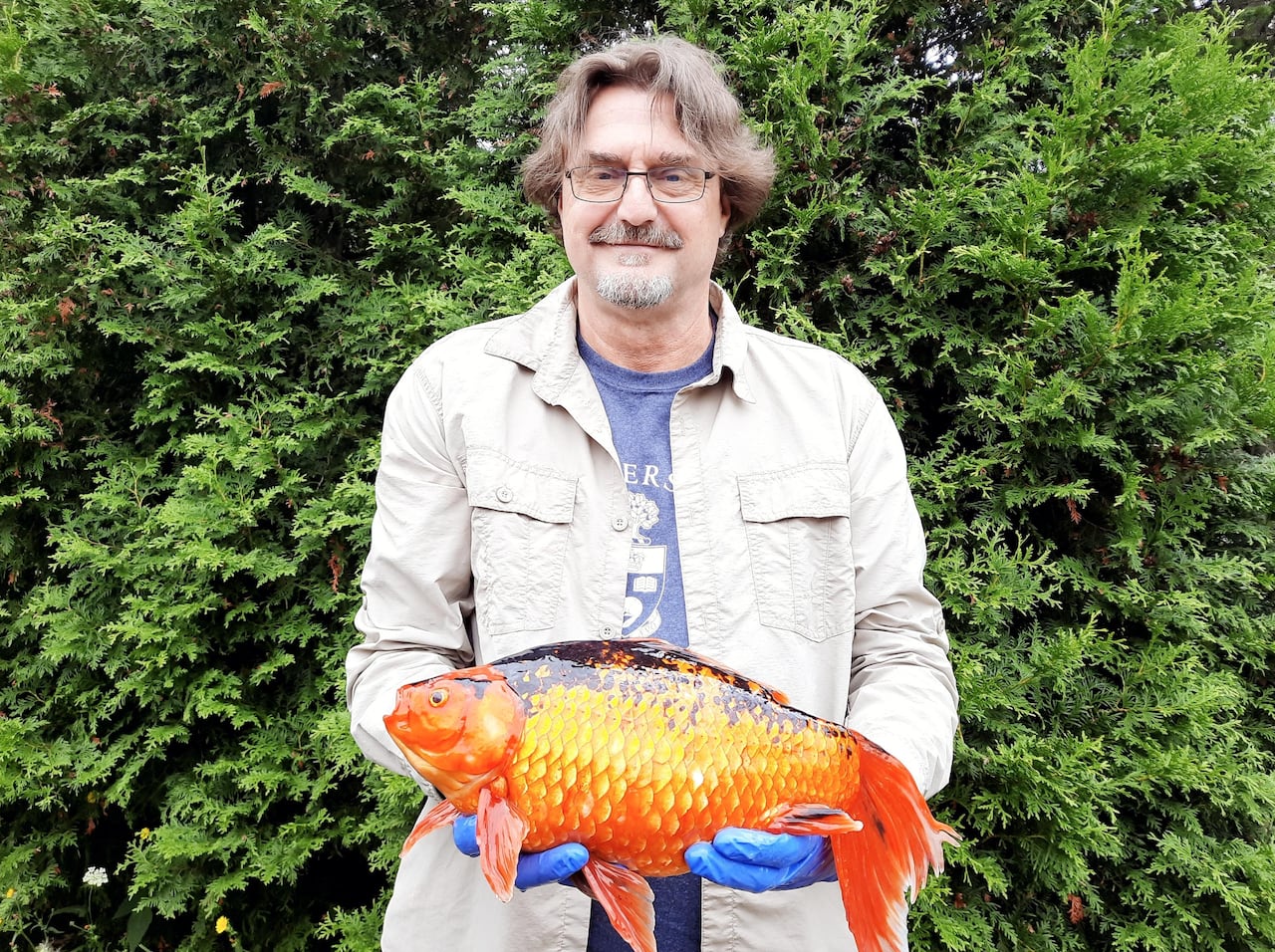
University of Toronto biology professor and invasive species researcher Nicholas Mandrak with a large goldfish caught in the wild. (Submitted by Nicholas Mandrak)
Mandrak indicates that stormwater management ponds are ideal places for goldfish to spawn.
<p"These ponds are located near homes, making them convenient spots for people to release their goldfish," he explained.
<p"Moreover, they are very suitable for goldfish, typically warmer than our lakes and rivers, which leads to higher reproduction rates and faster growth."
Mandrak’s research in Ontario focuses on strategies to manage the spread of goldfish from stormwater ponds into natural environments.
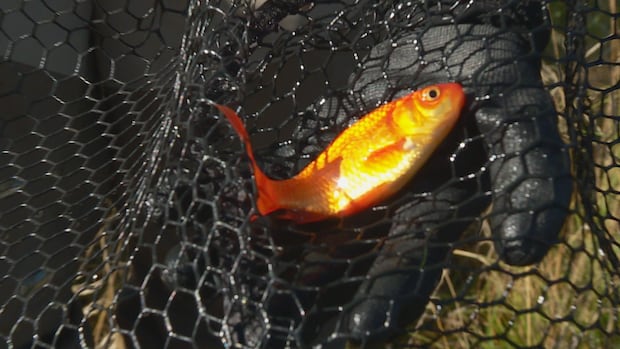
As Epcor employs chemical methods to manage invasive goldfish in a stormwater pond in the Glastonbury area, a group of residents in Edmonton reflect on the losses and achievements of their long-running campaign to persuade the utility company to adopt a more environmentally friendly approach.
The Alberta government is monitoring goldfish populations throughout the province.
There is currently no specific approach to manage goldfish once they have established themselves, which means that when culling is required, the entire fish population must be eradicated through chemical treatments or by draining that water body.
“If we do not halt the illegal release of goldfish into these ponds and their subsequent spread into the wild, this will escalate into a nationwide issue — affecting not just urban areas but the entire country — and negatively impacting the native species we cherish,” Mandrak stated.
The province advises that Albertans should report any sightings of goldfish or other invasive fish species to the Aquatic Invasive Species Hotline at 1-855-336-BOAT (2628), and if possible, provide a clear photograph that shows the entire body and fins of the fish for identification.
Individuals witnessing the suspected intentional release of an aquatic invasive species in Alberta are encouraged to contact the toll-free 24/7 Report A Poacher hotline at 1-800-642-3800.
