

Foreign Affairs Minister Anita Anand has stated that Canada remains committed to addressing public safety, transnational repression, and foreign interference as it works on a trade agreement with India — a nation that Ottawa had previously distanced itself from due to allegations of its involvement in the murder of a Sikh activist on Canadian territory.
“It is crucial to treat these issues with utmost seriousness, and we certainly do,” Anand expressed during an interview on CBC’s Power & Politics this Monday. “This applies not only to India but to all nations. Ensuring public safety and security is always a primary concern for our government.”
During her conversation with host David Cochrane, Anand mentioned that the federal government is “recalibrating the economic relationship” while making sure that Canadian law enforcement agencies operate independently and effectively.
Anand’s remarks followed the announcement that Canada and India have agreed to initiate negotiations for a new trade agreement.
This development was revealed on Sunday, shortly after Prime Minister Mark Carney’s meeting with Indian Prime Minister Narendra Modi at the G20 summit in Johannesburg, South Africa.
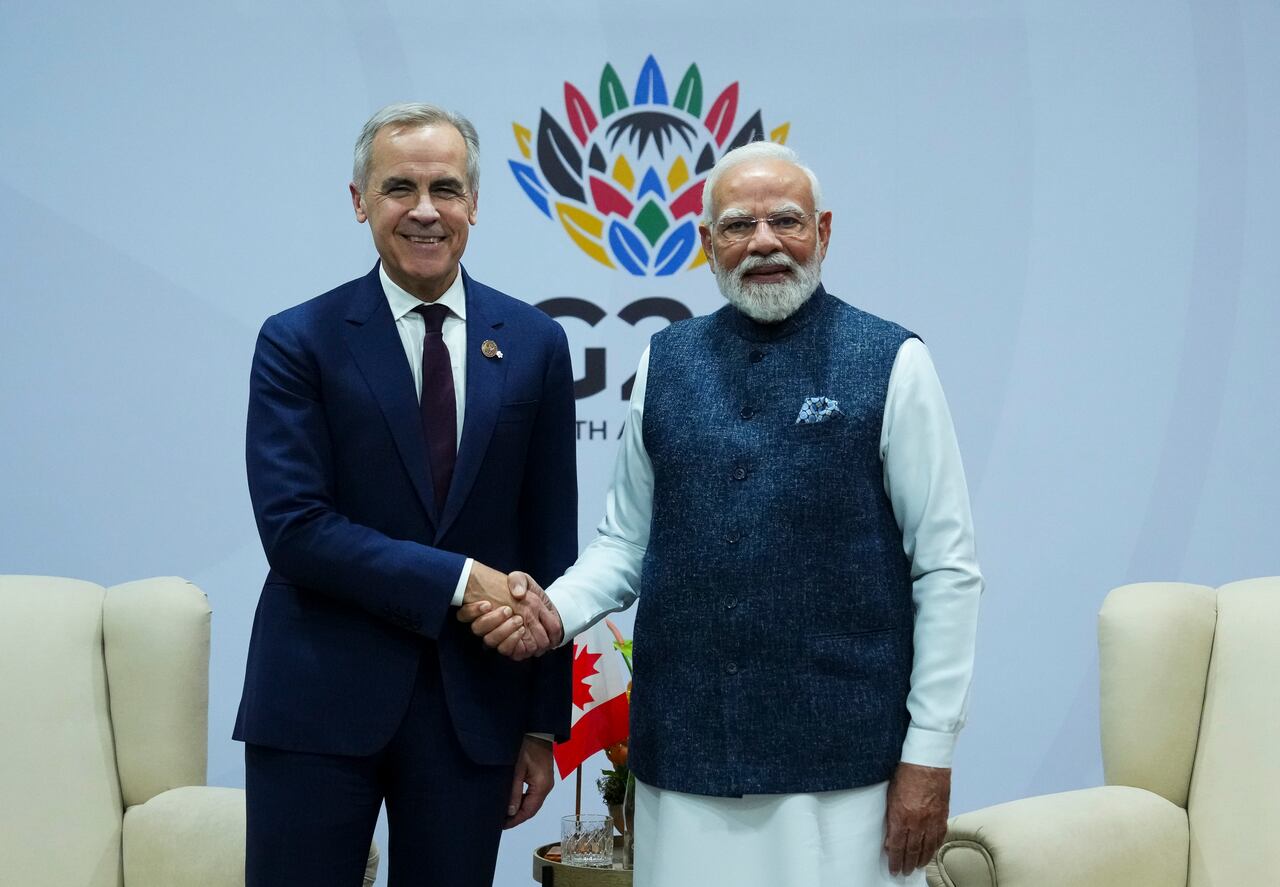
Prime Minister Mark Carney participates in a bilateral meeting with Indian Prime Minister Narendra Modi during the G20 summit on Sunday. (Sean Kilpatrick/The Canadian Press)
In a social media update shared on Sunday afternoon, Carney indicated that a trade agreement could potentially double the trade volume between Canada and India to $70 billion.
“India ranks as the fifth-largest economy globally, which translates to significant new opportunities for Canadian businesses and workers,” the prime minister noted.
This marks a further indication that the diplomatic relations between Canada and India are improving following a period of tension stemming from Canadian allegations that Indian agents were involved in the extrajudicial killing of Canadian Sikh activist Hardeep Singh Nijjar in 2023.
Anand remarked that the global trading landscape has “fundamentally changed” — a nod to U.S. President Donald Trump’s tariff policies — and emphasized that “Canada must also adjust its foreign policy focus accordingly.”
She affirmed that Canada’s “core values,” such as safeguarding democratic institutions against transnational repression, continue to be integral to its foreign policy.
“We are not retreating from our principles. Simultaneously, we are responsibly enhancing our trade relationships while defending and safeguarding our nation,” Anand stated.
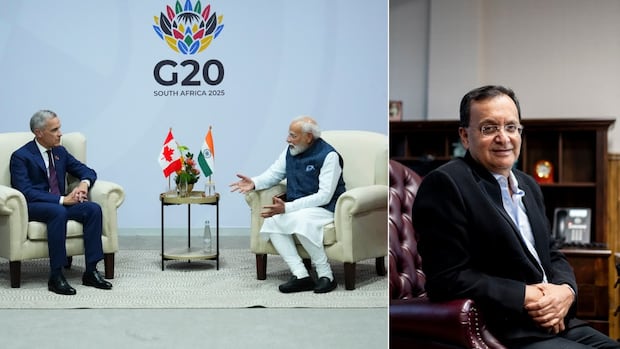
Chief political correspondent Rosemary Barton speaks with Indian High Commissioner to Canada Dinesh Patnaik about the trade discussions between Prime Minister Mark Carney and Indian Prime Minister Narendra Modi, and the friction still between the two countries.
Dinesh Patnaik, India’s high commissioner to Canada, mentioned in an interview on CBC’s Rosemary Barton Live on Sunday that discussions regarding trade between the two nations have been ongoing for several months.
Patnaik indicated to host Rosemary Barton that Canada should maintain its security concerns while seeking to strengthen ties with India, just as India does not overlook its own concerns.
“Both countries are mature enough to recognize that we need a relationship where we can discuss the safety of our citizens,” he articulated. “Canadians should feel safe on Canadian streets, and Indians should feel secure on Indian streets.”
Sikh activists oppose Carney’s stance
The announcement regarding the Canada-India trade deal coincided with a gathering of Canadian Sikhs in Ottawa for a referendum related to their campaign for an independent Sikh Punjab, known as “Khalistan” among Sikh nationalists.
One of the leading organizations in this movement is Sikhs for Justice, which was previously led by Nijjar until his assassination.
In a press release issued on Sunday evening, Sikhs for Justice reported that over 53,000 Canadian Sikhs from various regions participated in the referendum.
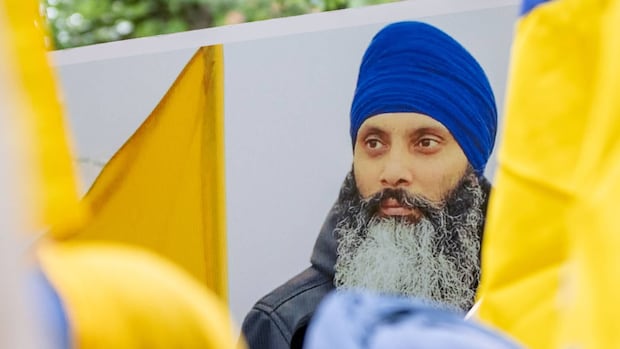
Hardeep Singh Nijjar was a pro-Khalistan activist and the president of a Sikh temple in Surrey, B.C. His day job was working as a plumber. For years, the Indian government called him a terrorist — a claim Nijjar repeatedly denied. So, who was Nijjar, and why did India think he was such a danger?
Sikhs for Justice emphasized that the participation represented both a vote for independence and “a clear statement that Canadian Sikhs do not endorse the Carney government’s engagement with India.”
Previously, the Indian government has characterized the referendum initiative as a provocation and an infringement on its sovereignty.
On Sunday, Patnaik referred to the referendum as “farcical” and pointed out that it is a delicate issue in India.
-
Analysis
Pragmatism and positivity: How Canada and India are framing a reset of strained ties
-
Carney signs onto AI and technology partnership with India and Australia
Before engaging with Modi, Carney informed reporters that Canada considers India to be a trustworthy trading partner and that an agreement would facilitate an increase in trade with “one of the world’s largest and fastest-growing economies.”
The prime minister further stressed the importance of remaining vigilant against any forms of foreign interference, mentioning that Canada has developed collaboration with Indian law enforcement and national security advisors.
“We are engaged with various nations to ensure the safety of Canadians, and we will persist in this effort,” Carney affirmed.
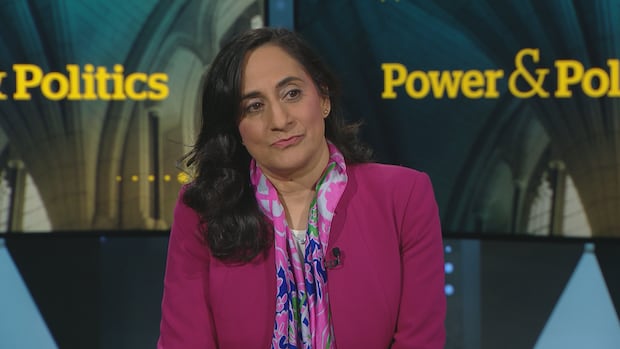
Canada and India have agreed to launch negotiations toward a new deal that could double bilateral trade to $70 billion. Foreign Affairs Minister Anita Anand tells Power & Politics economic growth conversations are happening against the backdrop of law enforcement dialogue between the countries.
