

A recent study conducted by a biologist from Trent University indicates that Toronto must change its strategy for managing coyotes, a suggestion that has stirred controversy among animal advocates.
The primary author, Dennis Murray, advocates for the euthanization of coyotes that repeatedly cause disturbances. He argues that the city delays this action too long, hoping the troublesome coyote will vacate the area voluntarily.
“Currently, it seems like the approach is to ignore the problem and wish for a positive outcome,” Murray commented regarding the city’s coyote coexistence and response strategy, which was recently approved by the city council.
Toronto has seen an increase in human-coyote encounters over the past few years, especially in the downtown areas of Liberty Village and Fort York.
Since 2020, city officials report nine instances of coyote bites on residents, alongside hundreds of dog attacks, some of which have been fatal.
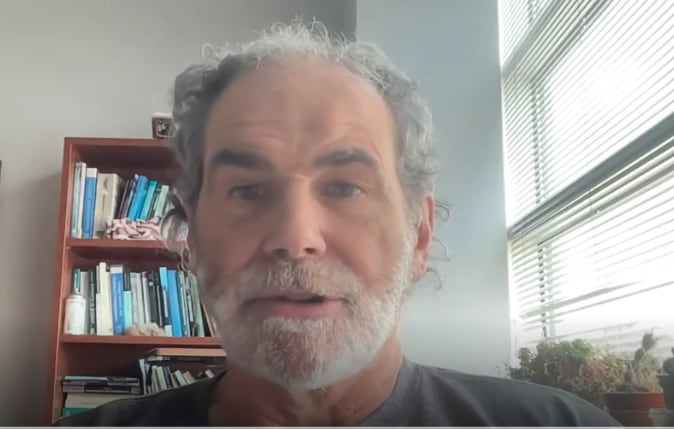
Prof. Dennis Murray, of Trent University, mentions that his research compiles data from various researchers and municipalities across North America. He concludes that municipalities often hesitate too long before euthanizing problematic animals, hoping the issue will resolve itself. (Zoom)
“Historically, coyote removal programs in North America have proven to be expensive, ineffective, and sometimes counterproductive,” city spokesperson Mahreen Dasoo stated in an email.
“Removal does not tackle the underlying reasons that lead to conflicts between coyotes and humans,” she added.
So far this year, there have been no recorded attacks on people within Toronto; however, last month, three individuals were bitten by coyotes in the Greater Toronto Area, including a young child in Whitby who suffered facial injuries.
In response to a series of dog attacks in the Liberty Village area last year, the city identified four specific coyotes, two of which were euthanized, while the remaining two left the area, according to a city announcement from May 2025.
Subsequently, the city finalized its updated coyote response plan, which emphasizes public education regarding coyote behavior and various aversion techniques.
The city’s strategy suggests aversion methods, or hazing, which can include actions such as waving brightly colored garbage bags, yelling, clapping, using a whistle, wielding a cane, or tossing a tennis ball or small rock in the direction of the coyote.
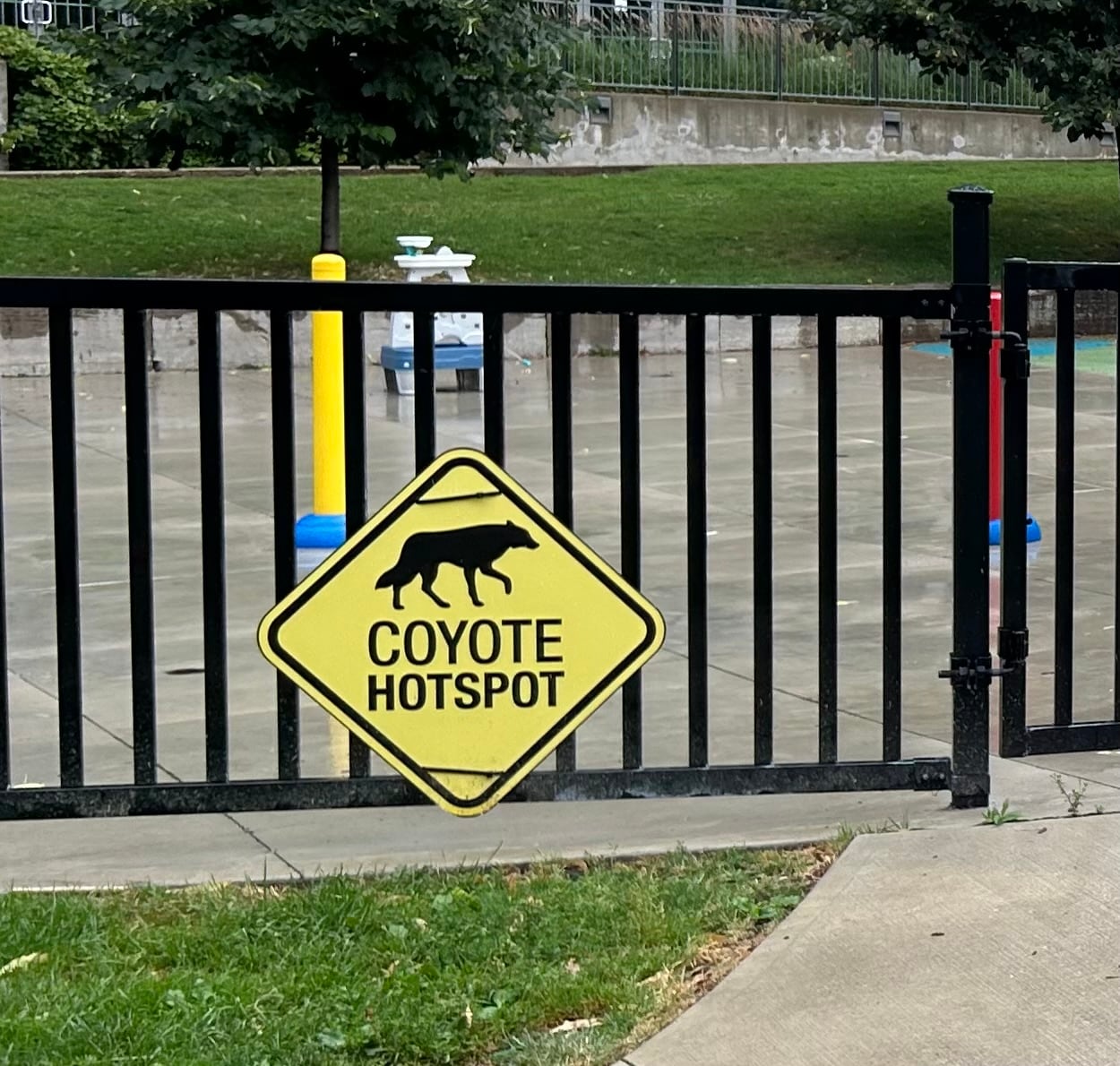
A sign alerting that coyotes have been sighted nearby is displayed on the fence of a playground in a downtown Toronto park. Raising public awareness about sightings is a key component of the city’s coyote awareness initiative. (Mike Smee/CBC)
Murray, however, argues in his peer-reviewed study published on July 15 in the journal Frontiers in Ecology and Evolution, that hazing often fails to keep coyotes away from humans and pets.
“Research shows that hazing only leads to noticeable avoidance if applied consistently and intensely during the early stages of habituation, and even then, the effects are usually short-lived,” he noted in the paper, co-authored with two members of the Coyote Safety Coalition, a community group from Liberty Village advocating for more proactive coyote removal measures.
The study also critiques municipalities for their heavy reliance on coexistence strategies instead of prioritizing safety.
The new coyote strategy by the city outlines a tiered system for responding to coyote sightings in urban settings, classifying encounters from simple sightings in populated areas to attacks on humans.
In between these extremes are various other serious interactions that correspond with suitable responses.
If a coyote enters a person’s property, city staff recommend hazing. If the animal pursues a human, the advice is to “install additional and/or customized coyote signage… and consider offering public education sessions.”
In cases where a pet is attacked while on a leash, the city suggests a response of “proactive patrols or educational visits and/or closing off pathways or parks.”
In the most severe scenarios—such as an attack on a person—the city’s strategy includes a thorough investigation with multiple steps, including determining “if the attack was provoked.” Remedial actions may involve euthanasia or relocation to a wildlife sanctuary.
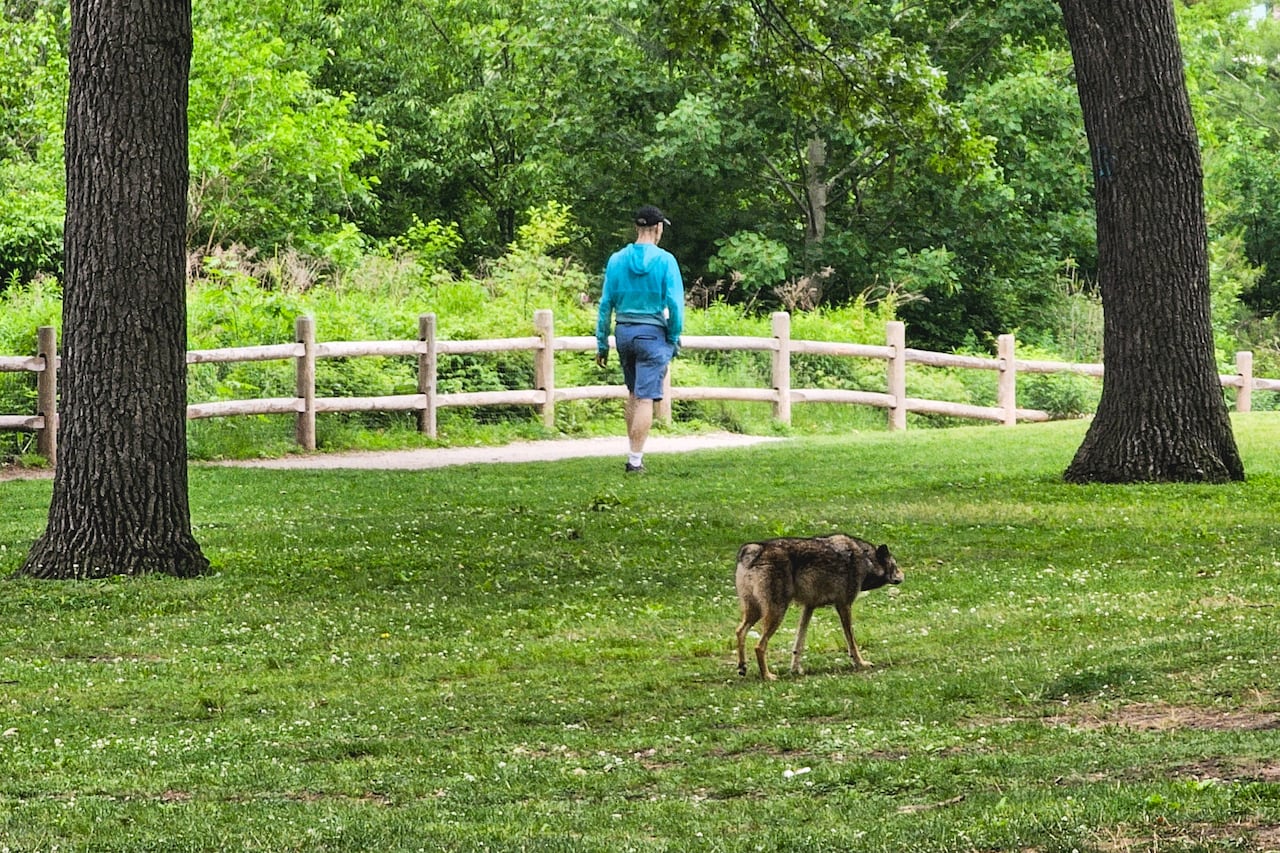
A coyote is spotted near a person in Toronto’s High Park on Wednesday, June 10, 2026. (Gio Ciampini/The Canadian Press)
In an interview with CBC Toronto, Murray expressed that the city’s plan has not been effective, primarily because the city takes too long to decide on euthanizing problematic coyotes.
“You can wave a garbage bag at them all you want, but they won’t change their behavior,” he said. “Eventually, more drastic measures must be taken to resolve this type of issue.”
Murray urged municipalities to leverage the insights from his research to create more effective coyote management strategies.
“The municipality can equip itself with improved information to make more informed and timely choices,” he stated.
Opposition to widespread culling
Murray clarified that he does not support widespread culling of coyotes, emphasizing that only repeat offenders should be identified and euthanized.
Dasoo responded to CBC Toronto in her email, asserting that a focus on coexistence and hazing is effective.
“The City adopts a coexistence-based model for coyote management because evidence and experience indicate that long-term prevention, public education, minimizing attractants, and aversion conditioning are successful strategies for maintaining boundaries between humans and wildlife,” she explained.
“Coexistence programs are recognized as best practices in wildlife management and also contribute to public health and environmental sustainability by allowing coyotes to fulfill their natural role in regulating rodent and small animal populations.”

Camille Labchuk, executive director of Animal Justice, argues that euthanizing coyotes is unjust, as human encroachment has largely led to their interactions with people. (Mike Smee/CBC)
Animal rights organization Animal Justice critiques the conclusions drawn in the study.
Executive director Camille Labchuk argues that lethal measures are never justified, regardless of a coyote’s actions within a community.
“Killing coyotes for a problem created by humans, such as habitat loss and destruction, is an unjust solution that does not have the support of the majority,” she stated in a conversation with CBC Toronto.
Labchuk proposed that relocation might be a viable option for coyotes that exhibit aggressive behavior towards people or pets.
Nevertheless, the city’s new policy indicates that while relocation is feasible in certain areas, it is generally considered a last resort in Toronto’s context.
Provincial regulations dictate that wild animals cannot be moved more than a kilometer from where they were captured, and cities must secure provincial approval to transfer an animal to a sanctuary.
Murray contends that relocating coyotes to different jurisdictions often fails because they are inherently territorial and may return, while moving a nuisance coyote merely shifts the problem to another municipality.

Dog walker and owner Elanja Corosky expresses that, as an animal lover, she opposes the euthanasia of any animal, including coyotes, yet acknowledges that action should be taken to safeguard both vulnerable pets and the coyotes that have sometimes targeted them. (Mike Smee/CBC)
In Liberty Village, responses from dog owners to Murray’s findings were mixed.
Many, like Elanja Corosky, generally opposed euthanasia.
“As an animal lover, I don’t want to see any animal put down,” she remarked, adding that this includes coyotes. “However, if they pose a greater threat, it becomes a matter that needs addressing.”
